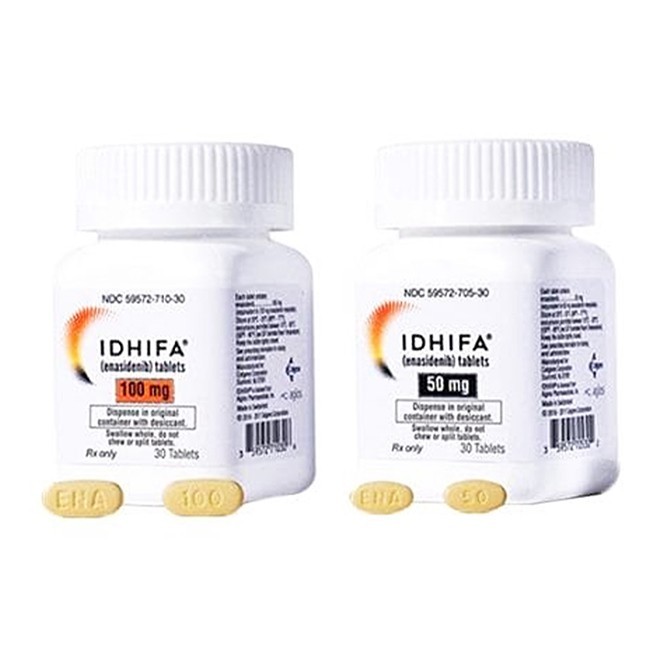


Enasidenib is an isocitrate dehydrogenase-2 (IDH2) inhibitor that offers a targeted treatment option for patients with relapsed or refractory acute myeloid leukemia (AML).
What are the Precautions for Enasidenib Administration?
Confirmation of Indications via Genetic Testing
Prior to medication administration, the presence of IDH2 mutations in blood or bone marrow must be confirmed using FDA-approved testing methods (e.g., Abbott RealTime IDH2 assay).
Patients without evidence of mutations cannot benefit from this treatment.
Baseline Status Assessment
Hematological parameters: Measure white blood cell count, hemoglobin level and platelet count, and evaluate transfusion dependence status.
Biochemical parameters: Focus on assessing bilirubin, transaminase, electrolytes and renal function.
Comorbidity screening: Pay special attention to hypertension, hepatic and renal dysfunction, and infection risks.
Prevention and Management of Differentiation Syndrome
Approximately 14% of patients may develop differentiation syndrome, characterized by fever, dyspnea, pulmonary infiltration, pleural or pericardial effusion, rapid weight gain or peripheral edema.
Symptoms typically manifest within 1 day to 5 months after the initiation of medication.
Immediate interventions are required: Initiate systemic glucocorticoid therapy (e.g., dexamethasone).
Enhance hemodynamic monitoring and arrange hospitalization for management if necessary.
In case of severe pulmonary symptoms (requiring mechanical ventilation) or progressive renal function deterioration lasting more than 48 hours, suspend enasidenib administration until symptoms resolve.
Prevention of Embryo-Fetal Toxicity
Women of childbearing potential must undergo pregnancy testing before starting treatment.
Effective non-hormonal contraceptive measures should be adopted during the treatment period and within 2 months after the last dose.
Male patients with partners of childbearing potential must also use contraceptive methods during treatment and for 2 months following drug discontinuation.
Management of Non-Infectious Leukocytosis
If the white blood cell count exceeds 30×10⁹/L, initiate hydroxyurea therapy in accordance with institutional standards.
In the event of an inadequate response, suspend enasidenib administration and resume treatment once the white blood cell count drops below 30×10⁹/L.
Medication Monitoring for Enasidenib
Frequency of Laboratory Monitoring
Initial phase: Conduct complete blood count and blood biochemistry tests before medication administration and at least every 2 weeks during the first 3 months of treatment.
Stable phase: The monitoring interval can be adjusted based on clinical needs.
Tracking of Specific Indicators
Dynamic monitoring of bilirubin: Bilirubin elevation (≥2 times the upper limit of normal value) may occur in 37% of patients, requiring close attention to the presence of accompanying liver injury.
Early warning of tumor lysis syndrome: Closely monitor indicators such as uric acid, phosphate, potassium and calcium, especially in patients with high tumor burden or renal insufficiency.