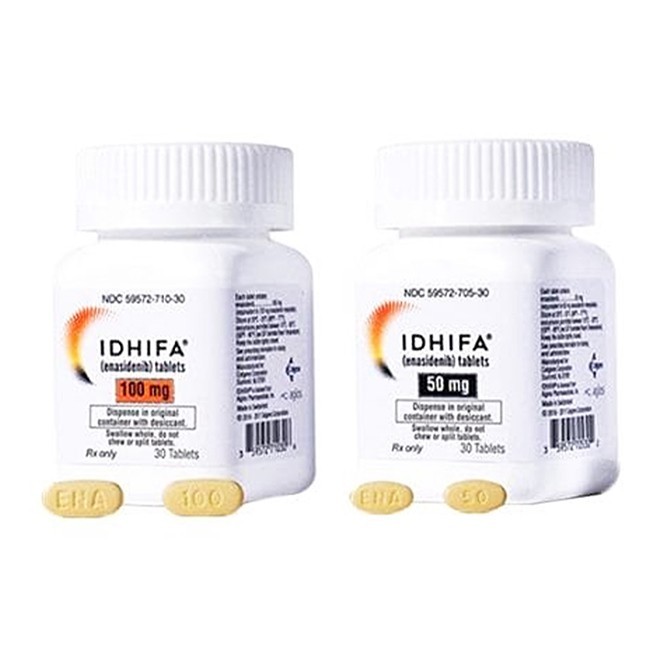


Enasidenib is a targeted therapy for adult patients with relapsed or refractory acute myeloid leukemia (AML) harboring a specific genetic mutation (IDH2 mutation).
Side Effects of Enasidenib
Common Side Effects
Gastrointestinal reactions: Nausea (50%), vomiting (34%), diarrhea (43%).
Metabolic and nutritional disorders: Decreased appetite (34%).
Abnormal laboratory parameters: Increased bilirubin (81%), decreased blood calcium (74%), decreased blood potassium (41%).
Severe Side Effects of Enasidenib
Differentiation Syndrome
This is the most severe and unique risk associated with enasidenib, with an incidence rate of approximately 14%. It can occur within 1 day to 5 months after the initiation of treatment and may be fatal if not managed promptly.
Main manifestations: Fever, dyspnea, hypoxia, acute respiratory distress, pulmonary infiltration, pleural or pericardial effusion, rapid weight gain or peripheral edema, bone pain, lymphadenopathy, and hepatic, renal or multi-organ dysfunction.
Management principles: Systemic corticosteroid therapy (e.g., dexamethasone) should be initiated immediately upon suspicion, along with hemodynamic monitoring.
If severe pulmonary symptoms requiring intubation or ventilator support occur, and/or renal dysfunction shows no improvement more than 48 hours after corticosteroid administration, enasidenib treatment should be interrupted. Resumption of medication may be considered only after symptoms have resolved to mild levels.
Non-infectious Leukocytosis
The drug may induce rapid proliferation of myeloid cells, leading to a significant elevation in white blood cell count (>30×10⁹/L).
This may require treatment with hydroxyurea.
If leukocytosis is poorly controlled with hydroxyurea, enasidenib should be interrupted and resumed only after the white blood cell count returns to normal.
Tumor Lysis Syndrome
Rapid tumor cell destruction may trigger tumor lysis syndrome, characterized by hyperuricemia, hyperkalemia, hyperphosphatemia, hypocalcemia, and acute kidney injury.
Relevant indicators should be closely monitored before treatment and during the initial treatment phase, and adequate hydration should be ensured.
Precautions for Enasidenib
Drug Interactions
Drugs with potentially increased concentrations: Substrates of CYP1A2 (e.g., caffeine), CYP2C19, OATP1B1/1B3/BCRP (e.g., rosuvastatin), and P-gp (e.g., digoxin).
Drugs with potentially decreased concentrations: Substrates of CYP3A (e.g., certain antifungal agents, hormonal contraceptives).
Special warning: Enasidenib can reduce the plasma concentrations of hormonal contraceptives, which may result in contraceptive failure. Women of childbearing potential must use effective non-hormonal contraceptive methods during treatment and for 2 months after discontinuing enasidenib.
Medication in Special Populations
Pregnant women: Based on animal studies, enasidenib may cause fetal harm. The pregnancy status of women of childbearing potential must be verified before treatment, and the associated risks should be communicated to them.
Lactating women: Breastfeeding is prohibited during treatment and for 2 months after the last dose of enasidenib.
Fertility: Animal studies indicate that enasidenib may impair fertility in both females and males, and the effect may be irreversible.
Elderly patients: No dosage adjustment is required. However, more than 60% of patients in clinical studies were aged over 65 years, so close monitoring is necessary.