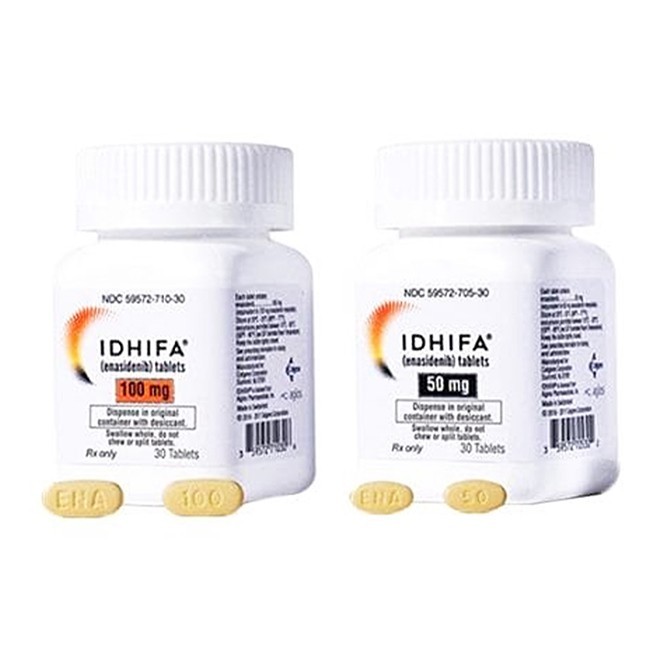


Enasidenib is a targeted therapeutic agent for the treatment of relapsed or refractory acute myeloid leukemia (AML) with an isocitrate dehydrogenase-2 (IDH2) mutation.
Side Effects of Enasidenib
Gastrointestinal Reactions
(1) The most common side effects of Enasidenib primarily involve the gastrointestinal system.
(2) Clinical data indicate that approximately 50% of patients experience nausea, 43% develop diarrhea, and 34% experience vomiting.
(3) While these symptoms are common, their severity varies, and most patients can achieve effective control with symptomatic treatment.
(4) Decreased appetite is also a common nutrition and metabolism issue, with an incidence rate of about 34%.
Laboratory Abnormalities
(1) Elevated Bilirubin: 81% of patients experience an increase in total bilirubin, with 15% reaching Grade 3 or higher severity.
(2) Electrolyte Imbalances: 74% of patients experience reduced blood calcium levels, 41% experience decreased blood potassium, and 27% experience reduced blood phosphorus.
Serious Side Effects of Enasidenib
Differentiation Syndrome
(1) This is one of the most serious side effects of Enasidenib, occurring in 14% of patients, with 7% being Grade 3 or higher in severity. Differentiation syndrome can be life-threatening and typically occurs between 1 day and 5 months after initiating treatment.
(2) Main symptoms include: fever (occurring in 36% of patients), dyspnea and hypoxia (68%). Pulmonary infiltrates (73%) and pleural effusion (45%), renal impairment (70%).
(3) Upon suspicion of differentiation syndrome, corticosteroid therapy should be initiated immediately along with hemodynamic monitoring until symptoms resolve.
(4) Enasidenib treatment should be interrupted if severe pulmonary symptoms requiring intubation or ventilator support occur, or if renal function continues to deteriorate for more than 48 hours.
Non-Infectious Leukocytosis
(1) Approximately 12% of patients experience a significant increase in white blood cell count, with 6% being severe.
(2) Treatment includes the use of hydroxyurea according to standard institutional practice. If leukocytosis does not improve, Enasidenib treatment should be interrupted until the white blood cell count returns to normal.
Other Serious Reactions
(1) Embryo-Fetal Toxicity: May cause fetal harm in pregnant women.
(2) Hepatic Impairment: Persistent elevation of bilirubin requires attention.
Precautions for Enasidenib Use
Pre-Treatment Preparation
Before starting Enasidenib therapy, it is mandatory to confirm the presence of an IDH2 mutation in the patient using an FDA-approved testing method for genetic detection.
Drug Interactions
(1) CYP1A2 and CYP2C19 Substrates: Concurrent use should be avoided.
(2) CYP3A Substrates: May reduce concentrations of hormonal contraceptives. The use of effective non-hormonal contraceptive methods is recommended.
(3) OATP1B1, OATP1B3, and BCRP Substrates: Concurrent use should be avoided.
(4) Caffeine: Enasidenib may potentiate the effects of caffeine. It is recommended to reduce caffeine intake within a 24-hour period.