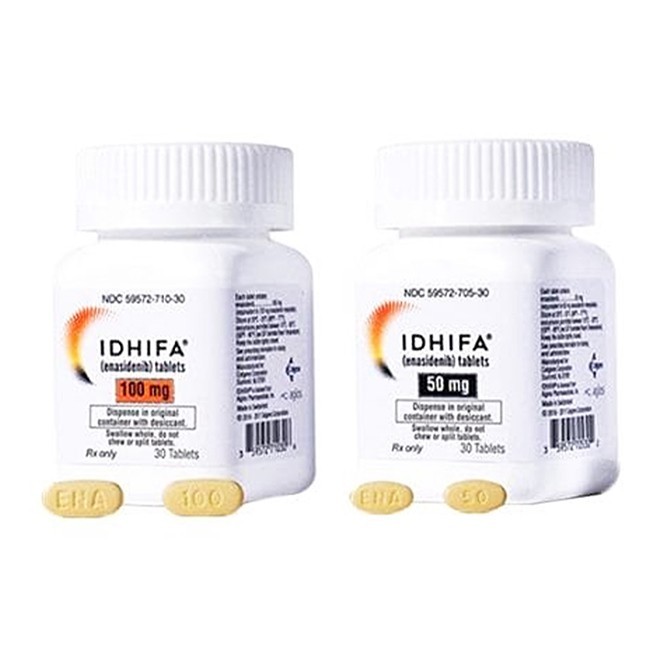


Enasidenib is a targeted medication for isocitrate dehydrogenase-2 (IDH2) mutations, indicated for adult patients with relapsed or refractory acute myeloid leukemia (AML). As a prescription-only drug, close attention must be paid to its potential side effects and medication-related risks during clinical use.
What Are the Side Effects of Enasidenib?
Common Side Effects
Gastrointestinal reactions: Nausea (50%), vomiting (34%), diarrhea (43%).
Metabolic and nutritional abnormalities: Decreased appetite (34%).
Abnormal Laboratory Indicators
Elevated bilirubin (81%), of which 15% are severe abnormalities of Grade 3 or higher.
Decreased blood calcium (74%), decreased blood potassium (41%), and decreased blood phosphorus (27%).
Some patients may experience taste disorders (12%), non-infectious leukocytosis (12%), etc.
Severe Side Effects of Enasidenib
Differentiation Syndrome
Incidence and risk: Approximately 14% of patients develop differentiation syndrome after receiving enasidenib treatment. Symptoms may occur within 1 day to 5 months of medication initiation and can be life-threatening in severe cases.
Typical manifestations: Fever, dyspnea, hypoxemia, pleural effusion, peripheral edema (rapid weight gain), bone pain, and liver/kidney function impairment.
Management measures: Upon suspicion of differentiation syndrome, initiate corticosteroid therapy (e.g., dexamethasone) and hemodynamic monitoring immediately; hospitalization may be required if necessary.
Embryofetal Toxicity
Animal studies have shown that enasidenib can cause embryonic death or developmental abnormalities.
Contraception recommendations: Females and males of reproductive potential must use effective non-hormonal contraceptive methods during treatment and for 2 months after the last dose.
Other Severe Adverse Reactions
Tumor lysis syndrome: Risk assessment should be conducted in advance, and electrolytes and renal function should be monitored.
Non-infectious leukocytosis: When the white blood cell count is significantly elevated (> 30 × 10⁹/L), hydroxyurea should be used in combination; enasidenib may need to be discontinued if necessary.
Precautions for Enasidenib Administration
Pre-Medication Screening and Dosage Standards
Genetic testing: Only applicable to AML patients with confirmed IDH2 mutations via FDA-approved testing methods.
Recommended dosage: 100 mg orally once daily, with or without food; the tablet must be swallowed whole.
Dosage adjustment: Discontinue or reduce the dosage to 50 mg/day based on toxicity grading (see Table 1); permanent discontinuation is required in case of severe recurrence of toxicity.
Management of Drug Interactions
Enasidenib may affect the efficacy of co-administered drugs by inhibiting or inducing hepatic enzymes and transporters.
Avoid co-administration: Substrates of CYP1A2, CYP2C19, CYP3A, and OATP1B1/BCRP (e.g., certain antifungal drugs, hormonal contraceptives).
Monitoring requirements: When co-administered with P-glycoprotein substrates (e.g., digoxin), enhanced monitoring of adverse reactions is required.
Administration in Special Populations
Pregnant women: Contraindicated due to the risk of teratogenicity.
Lactating women: Breastfeeding is prohibited during treatment and for 2 months after drug discontinuation.
Elderly patients: No dosage adjustment is required, but close monitoring of liver/kidney function and hematological indicators is necessary.