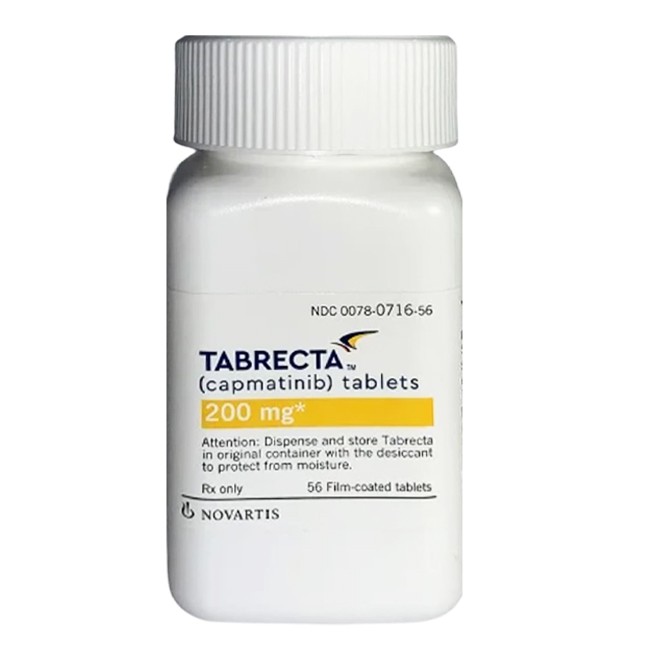


Capmatinib (Tabrecta) is a highly selective MET kinase inhibitor that has become an important targeted therapy for the treatment of metastatic non-small cell lung cancer (NSCLC) harboring MET exon 14 skipping mutations.
Adverse Reactions of Capmatinib (Tabrecta)
Fluid Retention and Systemic Symptoms
Edema: The incidence rate reaches 59%, among which 13% are grade 3–4 severe edema cases, manifesting as peripheral edema, generalized edema, facial edema, etc.
Fatigue: The incidence rate is 34%, with grade 3–4 cases accounting for 8%.
Pyrexia: The incidence rate is 14%.
Gastrointestinal Reactions
Nausea: Occurring in 46% of patients, with 2.4% being grade 3–4 cases.
Vomiting: The incidence rate is 28%, with grade 3–4 cases accounting for 2.4%.
Respiratory Symptoms
Dyspnea: The incidence rate is 25%.
Cough: Occurring in 21% of patients.
Severe Adverse Reactions of Capmatinib (Tabrecta)
Interstitial Lung Disease (ILD)/Pneumonitis
This is one of the most dangerous complications of capmatinib.
Clinical features include new or worsening pulmonary symptoms such as dyspnea, cough, pyrexia, etc.
The management principle emphasizes: immediately suspend medication once ILD/pneumonitis is suspected; permanent discontinuation is required if no other underlying causes are identified after confirmation.
Hepatotoxicity
Elevations in ALT/AST are observed in 15% of patients, with 7% being grade 3–4 cases.
Monitoring requirements include: liver function tests before treatment, every 2 weeks during the first 3 months, and monthly thereafter.
Implement temporary suspension, dose adjustment, or permanent discontinuation based on the severity of the reaction.
Precautions for Capmatinib (Tabrecta)
Standardization of Laboratory Monitoring
Liver function: Monitor ALT, AST and total bilirubin at baseline and regularly during treatment.
Pancreatic function: Monitor amylase and lipase levels.
Other parameters: Including serum creatinine, electrolytes, complete blood count, etc.
Drug Interactions
Strong and moderate CYP3A inducers: Concomitant use must be avoided, as they can significantly reduce the plasma concentration of capmatinib and impair its anti-tumor efficacy.
CYP1A2 substrates: Capmatinib can inhibit CYP1A2, thereby increasing the exposure of co-administered drugs.
P-gp and BCRP substrates: Concomitant use may increase the risk of adverse reactions of these drugs.