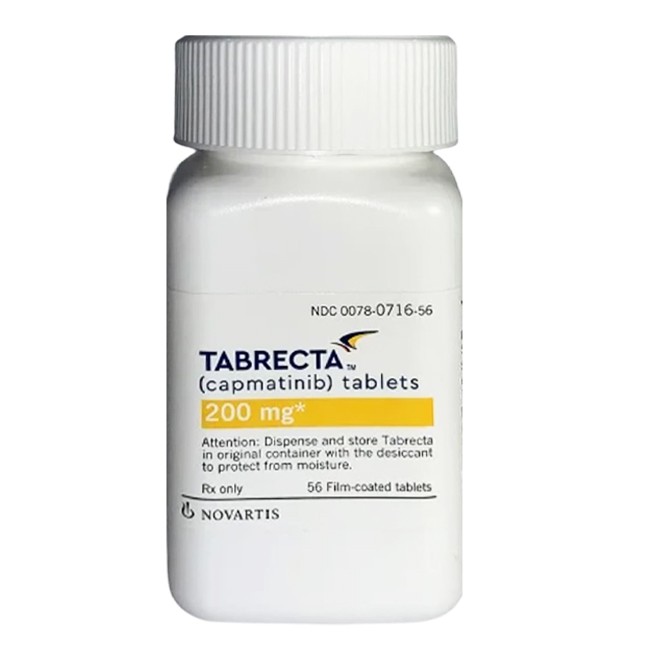


Capmatinib (Tabrecta) is the world’s first approved targeted therapy for metastatic non-small cell lung cancer (NSCLC) harboring MET exon 14 skipping mutations. Rational administration of this medication is crucial to ensuring its therapeutic efficacy.
Dosage and Administration, Recommended Dose of Capmatinib (Tabrecta)
Screening of Eligible Patient Population
Prior to treatment initiation, the presence of tumor mutations causing MET exon 14 skipping must be confirmed using an FDA-approved testing method.
If plasma sample testing yields a negative result, verification with tumor tissue testing is recommended.
Recommended Dosing Regimen
The fixed dose for adult patients is 400 mg per dose (equivalent to two 200 mg tablets), administered orally twice daily.
The interval between doses should be maintained at approximately 12 hours to sustain stable plasma drug concentrations.
Administration is not associated with food intake and can be adjusted according to the patient’s routine.
Dosing Instructions
Tablets must be swallowed whole; chewing or crushing is prohibited.
If a dose is missed, do not take a supplementary dose. Resume the next scheduled dose as planned.
If vomiting occurs after medication administration, no additional dose is required. Continue the medication according to the regular dosing schedule.
Dose Adjustment of Capmatinib (Tabrecta)
Management of Hepatotoxicity
In case of grade 3 transaminase elevation (ALT/AST > 5 times the upper limit of normal), treatment should be suspended. After liver function returns to baseline levels, resume dosing at a reduced initial dose of 300 mg twice daily.
Permanent discontinuation is required if grade 4 hepatotoxicity occurs.
Management of Pancreatic Toxicity
When significant elevations in lipase or amylase levels are observed, temporary suspension, dose reduction, or permanent discontinuation should be implemented based on the severity of the reaction.
Management of Interstitial Lung Disease (ILD)
Immediate and permanent discontinuation is mandatory for ILD/pneumonitis of any grade, which constitutes the most severe contraindication for this drug.
Administration in Special Populations
Patients with Hepatic or Renal Impairment
No dose adjustment is required for patients with mild to moderate hepatic impairment. Clinical data in patients with severe hepatic insufficiency are insufficient, and cautious use is recommended.
Similarly, no dose adjustment is needed for patients with mild renal impairment. However, no studies have been conducted in patients with severe renal insufficiency, necessitating individualized assessment.
Patients of Childbearing Potential
This drug is contraindicated in pregnant women, as it has demonstrated definite embryo-fetal toxicity.
Effective contraceptive measures must be adopted during treatment and for 1 week after discontinuation of the drug.
Lactating women should suspend breastfeeding during treatment.