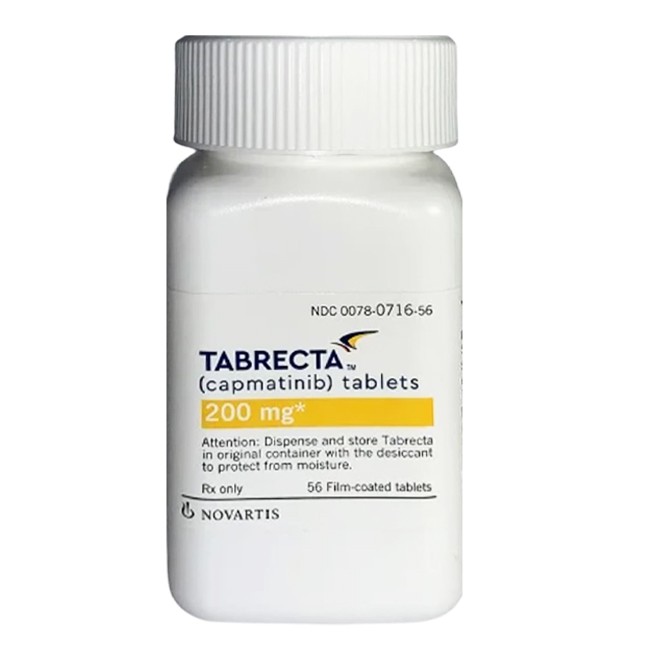


Capmatinib (Tabrecta) is a highly selective MET inhibitor that offers a precision treatment option for patients with metastatic non-small cell lung cancer (NSCLC) harboring MET exon 14 skipping mutations.
What Are the Precautions for Capmatinib (Tabrecta) Administration?
Confirmation of Indications via Genetic Testing
The presence of MET exon 14 skipping mutations must be confirmed in tumor tissue or plasma samples using an FDA-approved testing method (e.g., FoundationOne® CDx).
If plasma testing yields a negative result, supplementary testing of tumor tissue is recommended.
Comprehensive Baseline Screening
Organ function assessment: Test liver function (ALT/AST/total bilirubin), pancreatic function (amylase/lipase), and renal function.
Comorbidity screening: Focus on evaluating the risks of potential interstitial lung disease, abnormal liver function, and cutaneous photosensitivity reactions.
Prevention and Management of Interstitial Lung Disease (ILD)/Pneumonitis
The incidence rate was approximately 4.8% in clinical studies, among which 1.9% were grade 3 events, and fatal cases have been reported.
Immediately suspend medication if new or worsening respiratory symptoms (e.g., dyspnea, cough, fever) develop.
Permanent discontinuation is required upon confirmed diagnosis.
Management of Hepatotoxicity
Elevations in ALT/AST were observed in 5% of patients, with 7% of these cases classified as grade 3–4 events.
Test liver function before treatment initiation, every 2 weeks during the first 3 months of therapy, and monthly thereafter.
Implement temporary suspension, dose adjustment, or permanent discontinuation based on the severity of liver function abnormalities.
Prevention of Photosensitivity Reactions
Apply high-SPF sunscreen.
Wear protective clothing.
Minimize direct exposure to ultraviolet (UV) radiation.
Medication Monitoring for Capmatinib (Tabrecta)
Standardization of Laboratory Monitoring Frequency
Core indicators: Liver function (ALT/AST/bilirubin) and pancreatic enzymes (amylase/lipase) should be tested at baseline, every 2 weeks for the first 3 months, and monthly thereafter.
Dynamic Monitoring of Specific Toxicities
Hepatic injury warning: Suspend medication if ALT/AST levels exceed 3 times the upper limit of normal.
Permanent discontinuation is required if accompanied by elevated bilirubin levels.
Patients with Fertility Plans
Confirm the pregnancy status of female patients prior to medication initiation.
Adopt effective non-hormonal contraceptive measures during treatment and for 1 week after the last dose.
Patients with Hepatic or Renal Impairment
No dose adjustment is required for patients with mild to moderate hepatic impairment or renal impairment (creatinine clearance ≥ 30 mL/min).