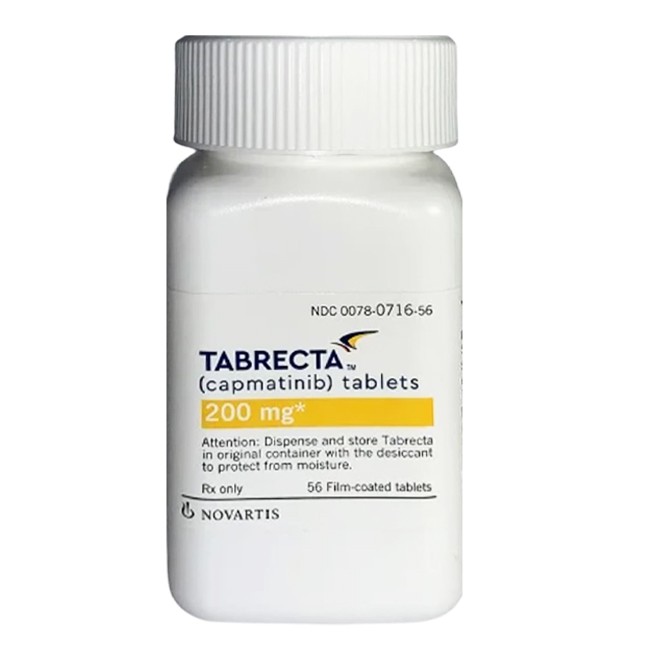


Capmatinib (Tabrecta) is a highly selective MET inhibitor indicated for the treatment of patients with advanced non-small cell lung cancer harboring MET gene mutations. By precisely inhibiting the activity of MET tyrosine kinase, the drug blocks the tumor cell proliferation signaling pathway, thereby suppressing tumor growth.
Adverse Reactions of Capmatinib (Tabrecta)
Peripheral Edema
Approximately half of the patients may develop limb edema, which usually presents as mild to moderate swelling.
It is recommended to elevate the affected limbs, restrict dietary sodium intake, and use diuretics under the guidance of a physician if necessary.
If edema is accompanied by dyspnea or rapid weight gain, immediate medical attention is required.
Hepatic Function Abnormalities
Elevated aspartate aminotransferase (incidence rate: 34%).
Elevated alkaline phosphatase (detection rate: 27%).
Increased total bilirubin (occurring in 30% of patients).
Gastrointestinal Reactions
Nausea and diarrhea are the most common gastrointestinal reactions.
Patients are advised to eat small, frequent meals and avoid greasy foods.
Ensure adequate fluid intake.
Antiemetic or antidiarrheal medications may be administered if necessary.
Severe Adverse Reactions of Capmatinib (Tabrecta)
Interstitial Lung Disease
Typical Clinical Manifestations: New-onset or worsening dyspnea.
Dry cough, sometimes accompanied by fever.
Chest radiograph showing pulmonary infiltrates.
Special Warning: Capmatinib must be permanently discontinued in patients diagnosed with drug-related interstitial lung disease.
Hepatic Function Impairment
In clinical trials, some patients were observed to develop severe hepatic adverse reactions.
Mandatory Monitoring During Treatment:
Hepatic function parameters (transaminases, bilirubin).
Coagulation function parameters.
Subtle changes in clinical symptoms.
Precautions for Capmatinib (Tabrecta) Administration
Pre-Treatment Assessment
Complete blood count.
Comprehensive liver function tests.
Renal function parameters.
Concomitant Use with Potent CYP3A4 Inducers
Co-administration of capmatinib with potent CYP3A4 inducers (e.g., rifampicin) results in a significant reduction in capmatinib exposure.
Special Reminder: Concomitant use of capmatinib with CYP3A4 substrate drugs may impair the efficacy of these drugs.
Requirements for Regular Monitoring
Hematological parameters: Test at least once a month.
Biochemical parameters: Including electrolytes and renal function.
Special Precautions During Treatment
Seek immediate medical attention if dyspnea occurs for the first time.
Monitor liver function parameters regularly.
Monitor changes in blood pressure closely.