

Cabergoline is a highly potent dopamine receptor agonist that is widely used in the clinical management of hyperprolactinemia and related diseases due to its unique pharmacological properties.
What Are the Indications for Cabergoline?
Treatment Scope
Cabergoline is mainly indicated for the treatment of hyperprolactinemia in adults, including idiopathic hyperprolactinemia and hyperprolactinemia caused by pituitary adenomas.
Its mechanism of action is based on high affinity for D2 receptors; it effectively reduces serum prolactin levels by directly inhibiting the secretory function of pituitary lactotroph cells.
Contraindications
This drug is explicitly contraindicated for the suppression or blocking of physiological postpartum lactation.
Such contraindications stem from severe adverse reaction cases reported with bromocriptine, a drug of the same class, when used outside its indicated scope, including hypertension, stroke, myocardial infarction, seizures, and even death.
During use, the scope of indications must be strictly followed to avoid potential risks associated with off-label medication use.
Dosage Forms and Specifications of Cabergoline
Dosage Form Design
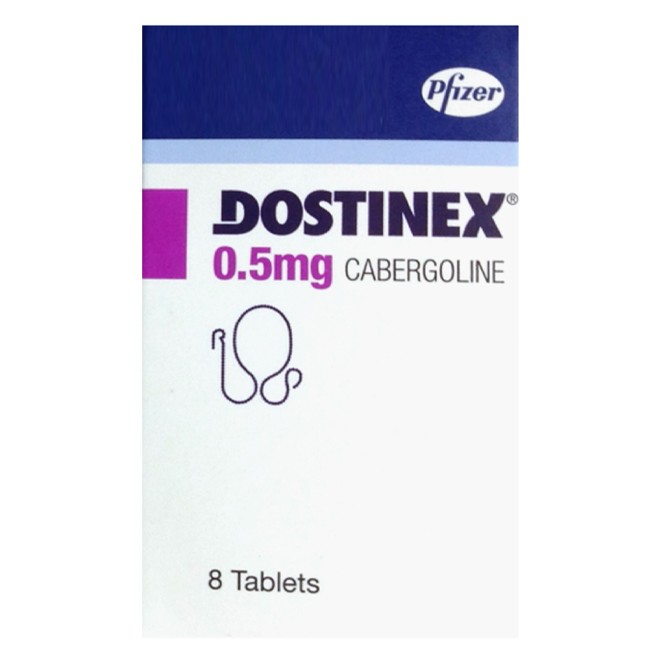
The currently available dosage form of cabergoline is oral tablets, with each tablet containing 0.5 mg of the active ingredient.
The tablets are white, feature a unique capsule-shaped design, and are equipped with functional score lines to facilitate dose adjustment.
The specific marking characteristics are as follows: letters P and U are engraved on either side of the score line on one side, and the number 700 is engraved on the other side.
Composition
In addition to 0.5 mg of cabergoline as the active ingredient, each tablet also contains USP-grade leucine and NF-grade lactose as excipients.
This formulation design ensures drug efficacy while also taking into account the stability and bioavailability of the medication.
Storage Methods for Cabergoline
Storage Conditions
Cabergoline tablets should be stored at room temperature between 20°C and 25°C (68°F and 77°F) and must be kept strictly in the original container.
This storage method can effectively maintain the stability of the drug’s chemical structure and prevent the degradation of active ingredients.
Precautions
To ensure that the drug efficacy is not affected, the medication should be protected from exposure to high temperatures, high humidity, or direct sunlight.
Meanwhile, the drug should be placed in a safe area out of the reach of children to avoid the risk of accidental ingestion.