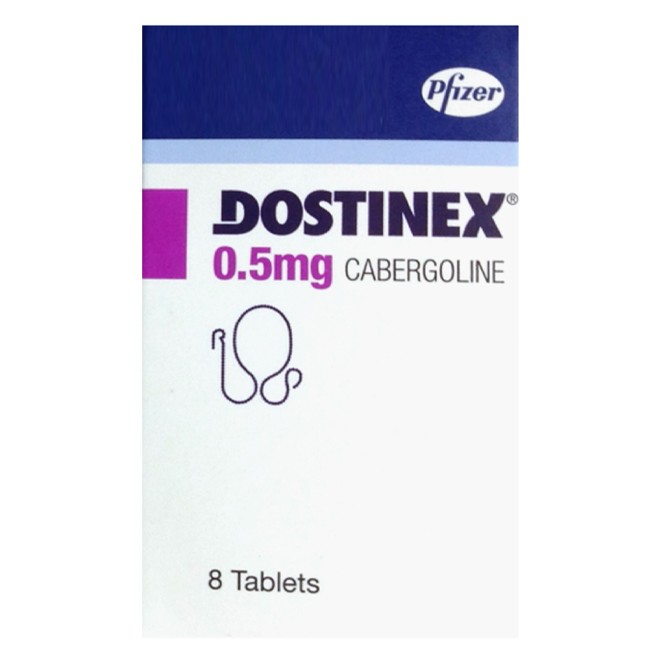


Cabergoline is a dopamine receptor agonist belonging to the class of ergot derivatives, primarily indicated for the treatment of hyperprolactinemia in adults. A clear understanding of its dosage and administration, dose adjustment principles, and precautions for use in special populations is crucial for ensuring optimal therapeutic outcomes.
Cabergoline Dosage, Administration, and Recommended Doses
Initial Dose and Dosing Regimen
The recommended initial dose of cabergoline is 0.25 mg per administration, taken orally twice weekly.
This medication may be administered with food or on an empty stomach, as food has no significant impact on its pharmacokinetics.
Dose Adjustment and Treatment Goals
The ultimate goal of treatment is to normalize the patient’s serum prolactin levels.
If the initial dose fails to achieve sufficient efficacy, the twice-weekly dosage may be gradually increased by increments of 0.25 mg per administration, with an interval of at least 4 weeks between adjustments.
Dose adjustments should be based on serum prolactin levels monitored at regular intervals (e.g., every 4 weeks).
Maximum Recommended Dose
The maximum recommended dose of cabergoline is 1 mg per administration, taken orally twice weekly.
Exceeding this dose does not yield additional therapeutic benefits but may instead increase the risk of adverse reactions.
Cabergoline Dose Adjustment
Dose Adjustment or Discontinuation Based on Safety Concerns
Valvular Heart Disease or Fibrosis: Discontinue cabergoline immediately if new-onset valvular heart disease is detected via echocardiography or if associated symptoms develop (e.g., chest pain, signs of heart failure).
Fibrotic Disorders: Discontinue the medication if signs or symptoms of pleural, pulmonary, or retroperitoneal fibrosis emerge (e.g., progressive dyspnea, persistent cough, chest pain, flank pain, lower extremity edema).
Impulse Control Disorders: Consider dose reduction or discontinuation if new or exacerbated compulsive behaviors occur, such as pathological gambling, hypersexuality, or uncontrollable spending.
Cabergoline Use in Special Populations
Patients with Hepatic Impairment
Mild Hepatic Impairment (Child-Pugh Class A): The standard dose may be administered as usual.
Moderate Hepatic Impairment (Child-Pugh Class B): Use with caution and enhance monitoring for adverse reactions, as drug exposure in these patients may increase by up to 1.5-fold.
Severe Hepatic Impairment (Child-Pugh Class C): Use is not recommended, as drug exposure may increase substantially (by approximately 5.6-fold), significantly elevating the risk of adverse reactions.
Patients with Renal Impairment
In patients with moderate to severe renal impairment, the pharmacokinetic parameters of cabergoline do not undergo significant alterations, so dose adjustment is generally not required.
However, the medication should still be administered cautiously based on the patient’s individual clinical condition.
Pregnancy
Cabergoline should not be used in women planning a pregnancy or who are already pregnant for the purpose of suppressing physiological lactation.
For patients receiving cabergoline treatment for hyperprolactinemia who become pregnant during therapy, physicians must conduct a reassessment. Continuation of treatment is only justified if the benefits to the mother outweigh the potential risks to the fetus.
Lactation
Cabergoline is contraindicated for suppressing or terminating physiological postpartum lactation, as this off-label use carries the risk of severe adverse reactions including hypertension, stroke, and myocardial infarction.
For lactating women requiring treatment for hyperprolactinemia, breastfeeding should be discontinued during the course of medication.