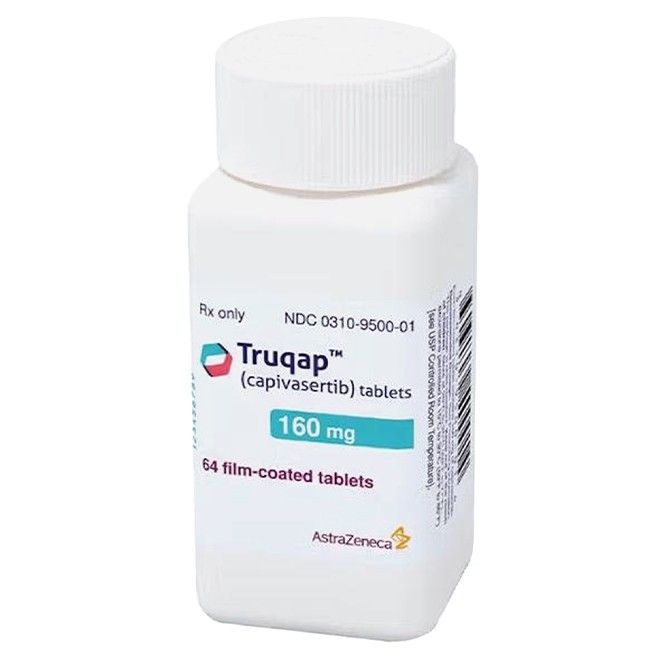


Capivasertib is a next-generation AKT kinase inhibitor. Used in combination with fulvestrant, it treats HR-positive, HER2-negative advanced breast cancer harboring PIK3CA/AKT1/PTEN mutations. While delivering significant efficacy, it also carries side effect risks that require close attention.
Side Effects of Capivasertib
Gastrointestinal Reactions
Diarrhea: The incidence rate is 77%, with 9% being grade 3-4 severe diarrhea.
Nearly 60% of patients require antidiarrheal medications to control symptoms.
Metabolic Abnormalities
Hyperglycemia: The incidence of random blood glucose elevation is 58%, and that of fasting blood glucose elevation is 37%.
Notably, 11% of patients develop grade 2 hyperglycemia (fasting blood glucose >160-250 mg/dL), 2% develop grade 3 (>250-500 mg/dL), and 1.1% develop grade 4 hyperglycemia (>500 mg/dL).
Hematological Toxicities
Lymphopenia (49%).
Hemoglobin reduction (47%).
Leukopenia (35%).
Neutropenia (25%).
Severe Side Effects of Capivasertib
Severe Hyperglycemia and Ketoacidosis
Capivasertib may cause severe hyperglycemia, including life-threatening diabetic ketoacidosis.
0.3% of patients develop diabetic ketoacidosis.
0.6% experience diabetic metabolic decompensation.
12% of patients required initiation or adjustment of hypoglycemic regimens during the study, among whom 4.8% needed insulin therapy.
Severe Diarrhea and Dehydration Risk
Up to 9% of patients may develop grade 3-4 severe diarrhea; 8% of these require dose reduction, and 2% discontinue treatment permanently due to diarrhea.
Severe dehydration caused by diarrhea is a clinical emergency that requires key prevention.
Precautions for Capivasertib
Pre-Treatment Assessment and Patient Selection
Genetic Testing: The presence of PIK3CA/AKT1/PTEN genetic alterations in tumor tissue must be confirmed using an FDA-approved detection method.
Metabolic Assessment: Test fasting blood glucose and glycated hemoglobin (HbA1c) levels.
Contraindicated Populations: Patients with severe hypersensitivity to capivasertib or any of its components are contraindicated.
Special Populations: The safety of capivasertib in patients with type 1 diabetes or diabetes requiring insulin has not been established.
Blood Glucose Monitoring Plan
Early Treatment Phase: Monitor fasting blood glucose on days 3-4 of the administration weeks in Weeks 1, 2, 4, 6, and 8.
Subsequent Monitoring: Conduct monthly monitoring until the end of treatment.
Glycated Hemoglobin: Test every 3 months.
When Hyperglycemia Occurs: Monitor fasting blood glucose at least twice a week until it returns to baseline.
During Hypoglycemic Medication Use: Monitor weekly for the first 2 months, then every 2 weeks thereafter.
Patient Education and Self-Management
Familiarize with early warning signs of hyperglycemia: excessive thirst, frequent urination, blurred vision, confusion, etc.
Early intervention for diarrhea: increase fluid intake and use antidiarrheal medications promptly.
Recognition of skin reactions: new or worsening rash, fever, blisters, etc.
Strictly follow the "4 days on, 3 days off" cycle for medication administration.
Avoid consuming grapefruit and grapefruit products.