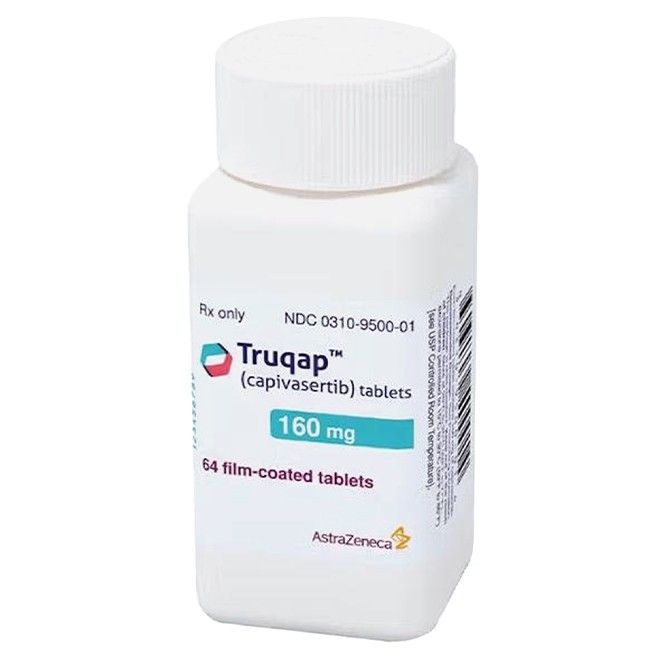


Capivasertib is a novel kinase inhibitor that received its first approval in the United States in 2023. As a precision therapy targeting specific gene mutations, it has demonstrated favorable efficacy in the treatment of hormone receptor-positive, HER2-negative advanced breast cancer.
Dosage and Administration of Capivasertib
Standard Dosing Regimen
The recommended dose of capivasertib is 400 mg taken orally twice daily (approximately 12 hours apart), with or without food.
The drug follows a specific intermittent dosing schedule: take the drug continuously for 4 days, then discontinue for 3 days. This cycle is repeated until disease progression or unacceptable toxicity occurs.
Specific Administration Details
The tablets should be swallowed whole and must not be chewed, crushed, or split.
Do not take any tablet that is broken, cracked, or incomplete.
If a dose is missed and noticed within 4 hours of the scheduled time, take the missed dose immediately.
If more than 4 hours have passed since the scheduled dose, skip the missed dose and take the next dose at the originally planned time.
If vomiting occurs after taking a dose, do not take an additional dose. Continue with the regular dosing schedule.
Dose Adjustments for Capivasertib
Dose Adjustments for Adverse Reactions
Appropriate dose adjustment measures should be taken based on the severity of adverse reactions.
For the first dose reduction, decrease to 320 mg twice daily, following the 4-day on/3-day off schedule.
If intolerance persists, a further reduction to 200 mg twice daily (same schedule) is allowed.
If intolerance remains after the second dose reduction, permanent discontinuation of the drug is required.
Hyperglycemia Management
When fasting blood glucose exceeds 160 mg/dL, consideration should be given to initiating or intensifying oral antihyperglycemic therapy.
If blood glucose ranges from 161 to 250 mg/dL, suspend the drug until blood glucose returns to normal.
If blood glucose exceeds 250 mg/dL, suspend the drug and then reduce the dose upon resumption.
In cases of life-threatening hyperglycemia consequences or persistent blood glucose above 500 mg/dL, permanent discontinuation of the drug should be considered.
Diarrhea Management
For grade 2 diarrhea, suspend the drug until symptoms resolve to grade 1.
For grade 3 diarrhea, treatment can resume only if symptoms resolve within 28 days.
For grade 4 diarrhea, immediately discontinue the drug permanently.
Capivasertib Use in Special Populations
Patients with Hepatic or Renal Impairment
No dose adjustment is needed for patients with mild to moderate renal impairment, but the efficacy in patients with severe renal impairment has not been established.
No dose adjustment is required for patients with mild hepatic impairment. Patients with moderate hepatic impairment need close monitoring for adverse reactions, while there is no experience with the use of capivasertib in patients with severe hepatic impairment.
Reproductive-Age Populations
Female patients: Effective contraceptive measures should be used during treatment and for 1 month after the last dose.
Male patients: Effective contraceptive methods should be used with female partners of childbearing potential during treatment and for 4 months after the last dose. The pregnancy status of reproductive-age women should be verified before treatment initiation.
Pregnancy and Lactation
Capivasertib poses potential risks to the fetus and is contraindicated in pregnant women.
Lactating women should discontinue breastfeeding during treatment, as the drug may be excreted in human milk.