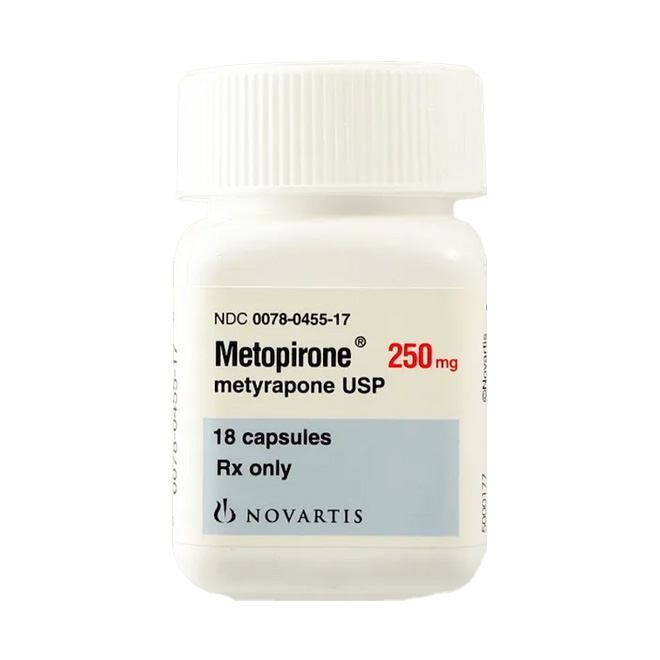


Metyrapone is a key medication for diagnosing adrenal cortex insufficiency. Since its first approval in the United States in 1961, it has become an important diagnostic tool in the field of endocrinology.
What Kind of Medication Is Metyrapone?
Pharmacological Actions
Metyrapone is an adrenal cortex 11β-hydroxylase inhibitor, with its chemical name being 2-methyl-1,2-di-3-pyridyl-1-propanone.
By inhibiting the 11β-hydroxylation reaction in the adrenal cortex, this medication significantly reduces the production of cortisol and corticosterone.
This inhibitory effect relieves the negative feedback regulation of cortisol on the pituitary gland, leading to an increase in the secretion of adrenocorticotropic hormone (ACTH).
During continuous administration, the adrenal glands will secrete large amounts of 11-deoxycortisol—a cortisol precursor. Changes in the concentration of 11-deoxycortisol in plasma and urine serve as important biomarkers for evaluating the function of the hypothalamic-pituitary-adrenal (HPA) axis.
Scope of Diagnostic Applications
When used in combination with relevant detection methods, metyrapone is suitable for diagnosing adrenal cortex insufficiency in adult and pediatric patients.
In a single-dose short test, by measuring the levels of plasma 11-deoxycortisol and ACTH after medication administration, doctors can accurately determine the functional status of the patient's HPA axis.
It is particularly important to note that this medication is mainly used for long-term assessment of adrenal function, and its diagnostic value is limited for patients who have been on medication for a short period (less than 4 weeks).
Specifications and Physical Properties of Metyrapone
Dosage Form Design and Content Standards
Metyrapone is supplied in the form of soft capsules, with each capsule containing 250 mg of the active ingredient metyrapone.
The capsules are white to off-white, oval, and opaque, with "HRA" printed on one side using red ink.
Ingredient Composition and Physicochemical Properties
Metyrapone, the active ingredient of the medication, is a fine crystalline powder ranging from white to light amber, with a characteristic odor.
It is slightly soluble in water, easily soluble in methanol and chloroform, and has a molecular weight of 226.27.
In addition to the active ingredient, the capsules also contain a variety of excipients: ethyl vanillin, gelatin, glycerin, polyethylene glycol 400, polyethylene glycol 4000, p-methoxyacetophenone, purified water, sodium ethylparaben, sodium propylparaben, titanium dioxide, and components of red ink.
Storage Conditions for Metyrapone
Environmental Control Requirements
Metyrapone must be stored at room temperature between 20°C and 25°C (68°F and 77°F), with short-term exposure to temperatures ranging from 15°C to 30°C (59°F to 86°F allowed).
The medication should always be kept in its original container to avoid the effects of light, high temperatures, and humid environments.
Operating Specifications and Risk Prevention
Sealing Protection: Immediately close the bottle cap tightly after use to prevent the medication from absorbing moisture and deteriorating.
Light Protection Measures: The coating of the capsules is designed to provide light protection; unnecessary replacement of the packaging should be avoided.
Humidity Monitoring: Storage in high-humidity areas such as bathrooms and kitchens is strictly prohibited.
Safety Protection: The medication must be placed out of the reach of children to prevent accidental ingestion.