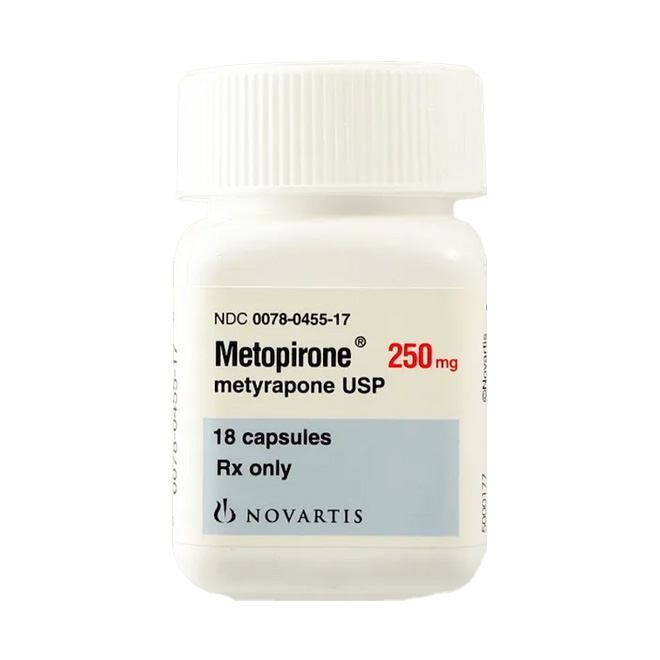


Metyrapone is an inhibitor of adrenal steroid synthesis. It is mainly used in combination with other diagnostic tests for the diagnosis of adrenal cortex insufficiency in adult and pediatric patients.
How to Use Metyrapone
Recommended Dosage and Administration Method
This product adopts a single-dose short-term test protocol: the recommended single dose for adult and pediatric patients is 30 mg/kg (maximum dose not exceeding 3 grams), to be taken at midnight with milk, yogurt, or snacks.
Blood samples should be collected for testing on the early morning after medication administration. After blood sample collection, a prophylactic dose of glucocorticoids may be considered for patients at high risk of acute adrenal cortex insufficiency.
Dosage Form and Specification
Metyrapone is available as soft capsules, with each capsule containing 250 mg of the active ingredient. The capsules are white to off-white, oval, and opaque, with "HRA" printed on one side using red ink.
Important Pre-Medication Preparation
Before using metyrapone, medications that affect pituitary or adrenal cortex function must be discontinued based on their half-lives (it is recommended to allow at least 5 half-lives to eliminate interference with test results).
The patient's adrenal response ability to exogenous adrenocorticotropic hormone (ACTH) must be evaluated in advance.
Patients suspected of having adrenal cortex insufficiency based on previous test results should be hospitalized for observation as a preventive measure.
Dose Adjustment of Metyrapone
Patients with Hepatic Dysfunction
Patients with cirrhosis may have a weakened response to metyrapone, requiring special attention to monitoring.
Management of Overdose
Overdose symptoms mainly present as gastrointestinal symptoms and signs of acute adrenal cortex insufficiency, including arrhythmia, hypotension, dehydration, anxiety, disturbance of consciousness, hyponatremia, and hyperkalemia.
Management of Drug Interactions
Anticonvulsants, psychotropic drugs, hormonal preparations, glucocorticoids, antithyroid drugs, and cyproheptadine may affect the results of the metyrapone test.
If these drugs cannot be discontinued, the necessity of performing the metyrapone test should be re-evaluated.
Metyrapone inhibits the glucuronidation of acetaminophen, which may reduce its elimination rate and increase the risk of adverse reactions. Therefore, concurrent use should be avoided.
Medication Use in Special Populations for Metyrapone
Pregnant Women
Existing data, derived from published case series and reports, are insufficient to determine the drug-related risks of metyrapone for major birth defects or miscarriage.
Metyrapone can cross the placenta and may reduce fetal cortisol production.
When the metyrapone test is used in the second and third trimesters of pregnancy, the fetal pituitary gland is found to respond to enzyme blockade.
There are reports indicating that infants exposed to metyrapone in utero have low cortisol levels at birth.
Pediatric Patients
Metyrapone can be used for the diagnosis of adrenal cortex insufficiency in pediatric patients.
The medication protocol is the same as that for adults, with a single dose of 30 mg/kg administered at midnight.