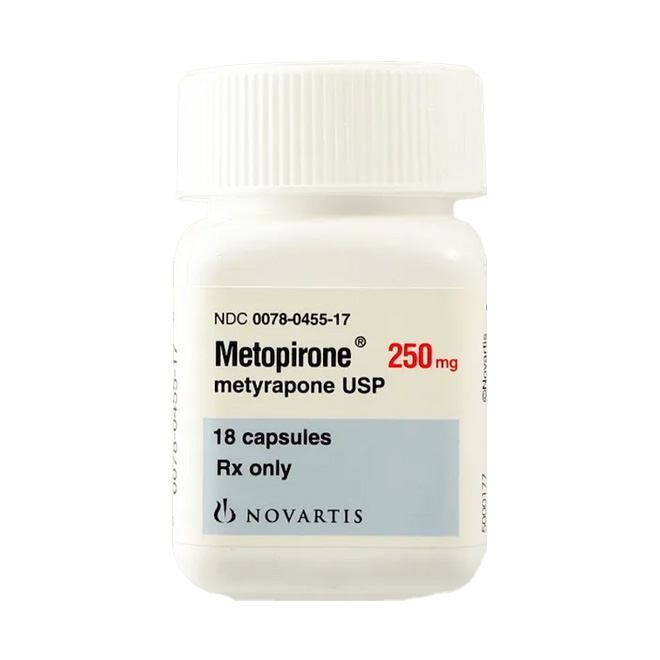


Metyrapone is an inhibitor of adrenal steroid synthesis, primarily used in combination with other diagnostic tests to confirm the diagnosis of adrenal cortex insufficiency in adult and pediatric patients.
Precautions for Metyrapone Administration
Core Contraindications
Metyrapone is absolutely contraindicated in two groups of patients.
It is strictly prohibited for patients with known adrenal cortex insufficiency.
It is also contraindicated for patients with a history of allergic reactions to metyrapone or any of its components.
Risk of Adrenal Insufficiency
Metyrapone may induce acute adrenal insufficiency during use, with a significantly higher risk in patients with reduced adrenal secretion capacity and those with panhypopituitarism.
This risk requires that before using metyrapone for testing, the patient’s adrenal response to exogenous adrenocorticotropic hormone (ACTH) must first be confirmed.
In the presence of hypothyroidism or hyperthyroidism, the patient’s response to the metyrapone test may be lower than normal.
If the impairment of adrenal cortex or anterior pituitary function is more severe than indicated by the test results, metyrapone may trigger adrenal insufficiency, which needs to be corrected by administering an appropriate dose of corticosteroids.
Dizziness and Sedative Effects
Metyrapone may cause adverse reactions such as dizziness and sedation.
Due to this side effect, patients should not drive vehicles or operate machinery after taking the medication until these effects have completely subsided.
Other Drugs Affecting Metyrapone
A variety of drugs may affect the accuracy of metyrapone test results, including anticonvulsants, psychotropic drugs, hormonal preparations, corticosteroids, antithyroid drugs, and cyproheptadine.
If these drugs cannot be discontinued, the necessity of performing the metyrapone test needs to be re-evaluated.
Before conducting the metyrapone test, drugs that affect pituitary or adrenal cortex function should be discontinued based on their half-lives.
Effects of Metyrapone on Other Drugs
Metyrapone inhibits the glucuronidation of acetaminophen, which may lead to a decrease in acetaminophen clearance and thus increase the risk of adverse reactions associated with it.
Concurrent use of metyrapone and acetaminophen should be completely avoided.
Metyrapone Administration Monitoring
Adverse Reaction Monitoring
Cardiovascular system: Hypotension.
Gastrointestinal system: Nausea, vomiting, abdominal discomfort or pain.
Central nervous system: Headache, dizziness, sedation.
Skin system: Allergic rash.
Hematological system: Leukopenia, anemia, and/or thrombocytopenia.
Overdose Management Process
The clinical manifestations of metyrapone overdose are characterized by gastrointestinal symptoms and signs of acute adrenal insufficiency.
If an overdose is detected within 1 hour of administration, treatment with activated charcoal may be considered.
Immediately administer hydrocortisone, combined with intravenous infusion of normal saline and glucose.
Continuously monitor blood pressure and fluid-electrolyte balance for several days.