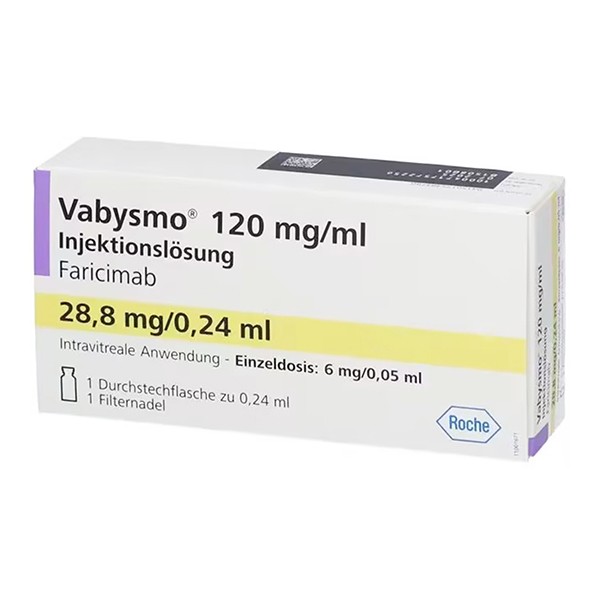


Vabysmo (faricimab) is a bispecific antibody drug that has shown promising efficacy in improving visual outcomes, but it is accompanied by a series of side effects and precautions that require vigilance.
Side Effects of Vabysmo (Faricimab)
Ocular Adverse Reactions
Cataract is the most common side effect, occurring in up to 15% of treated patients. This lens opacification may gradually affect vision and requires regular assessment during treatment.
Conjunctival hemorrhage has an incidence of 8%, presenting as blood streaks or patchy bleeding on the sclera. Although it typically does not cause long-term visual impairment, its frequency requires monitoring.
Increased intraocular pressure (IOP) occurs in 4% of cases, usually within 60 minutes after injection. Close monitoring is necessary to avoid damage to the optic nerve.
Severe Side Effects of Vabysmo (Faricimab)
Risk of Ocular Infection and Inflammation
If left untreated, this intraocular infectious disease may lead to permanent vision loss.
Patients must be instructed to immediately report any suspected symptoms of endophthalmitis, including vision loss, eye pain, redness, photophobia, and blurred vision.
Proper sterile injection techniques must always be maintained during administration.
Thromboembolic Events
Although the incidence of arterial thromboembolic events (ATEs) was low in Vabysmo's clinical trials, there is a potential risk of ATEs following intravitreal injection of VEGF inhibitors.
ATEs are defined as non-fatal stroke, non-fatal myocardial infarction, or vascular death.
Retinal Vasculitis and Vascular Occlusion
Retinal vasculitis and/or retinal vascular occlusion may occur with Vabysmo use, often accompanied by intraocular inflammation.
Patients who experience these events should discontinue Vabysmo treatment.
Patients should be advised to immediately report any changes in vision.
Precautions for Vabysmo (Faricimab)
Identification of Contraindications
Contraindicated in patients with ocular or periocular infections.
Contraindicated in patients with active intraocular inflammation.
Contraindicated in patients with a known hypersensitivity to faricimab or any excipients in Vabysmo.
Injection-Related Special Considerations
IOP Management: Transient increases in intraocular pressure (IOP) may occur following intravitreal injection, including with Vabysmo.
IOP and optic nerve head perfusion should be monitored and managed appropriately.