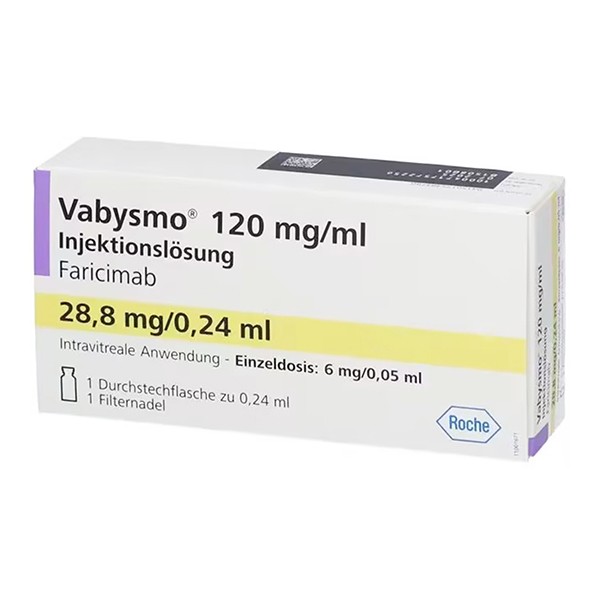


Vabysmo (faricimab) is a dual-pathway inhibitor approved in recent years, demonstrating significant therapeutic effects by simultaneously targeting vascular endothelial growth factor (VEGF) and angiopoietin-2 (Ang-2).
What Are the Precautions for Using Vabysmo (Faricimab)?
Contraindication Screening
Vabysmo is explicitly contraindicated in three categories of patients: those with ocular or periocular infections, active intraocular inflammation, and individuals hypersensitive to faricimab or any component of the formulation.
Special attention should be paid to allergic reactions presenting as skin rashes, pruritus, urticaria, erythema, or severe intraocular inflammation.
Do not use if the drug packaging, prefilled syringe, or injection filter needle is expired, damaged, or shows signs of tampering.
Confirmation of Drug Properties
Carefully inspect the appearance of the medicinal solution before use. Normal Vabysmo should be a clear to opalescent, colorless to tan liquid solution.
Do not use if particles, turbidity, or discoloration is observed.
Considerations for Special Populations
Pregnant women should use the drug with caution after weighing the benefits and risks. Animal studies have shown that administration of faricimab during organogenesis may increase the risk of miscarriage.
Women of childbearing age must use effective contraception before the initial dose, during treatment, and for at least three months after the last dose.
Lactating women should use the drug after comprehensively considering the developmental and health benefits of breastfeeding and the potential risks of the drug to the nursing infant.
The efficacy in pediatric patients has not been established, while no dosage adjustment is required for elderly patients.
Selection of Injection Devices
Vabysmo is available in two dosage forms: prefilled syringes and vials, each designed for single-eye treatment only.
Prefilled syringes must be used with the provided injection filter needle, while vial packaging requires the use of the provided blunt transfer filter needle and a 30G injection needle.
Medication Monitoring for Vabysmo (Faricimab)
Real-Time Monitoring of Adverse Reactions
The most common adverse reactions of Vabysmo include cataracts (15%) and conjunctival hemorrhage (8%).
Other adverse reactions requiring attention include vitreous detachment, vitreous floaters, retinal pigment epithelial tear, increased intraocular pressure, eye pain, and intraocular inflammation.
Systemic Risk Prevention and Control
Although the incidence of arterial thromboembolic events (ATEs) was low in Vabysmo's clinical trials, there remains a potential risk of ATEs following intravitreal use of VEGF inhibitors.
Cases of retinal vasculitis and/or retinal vascular occlusion have been reported in post-marketing use.
If these events occur, Vabysmo treatment should be discontinued, and patients should immediately report any changes in vision.