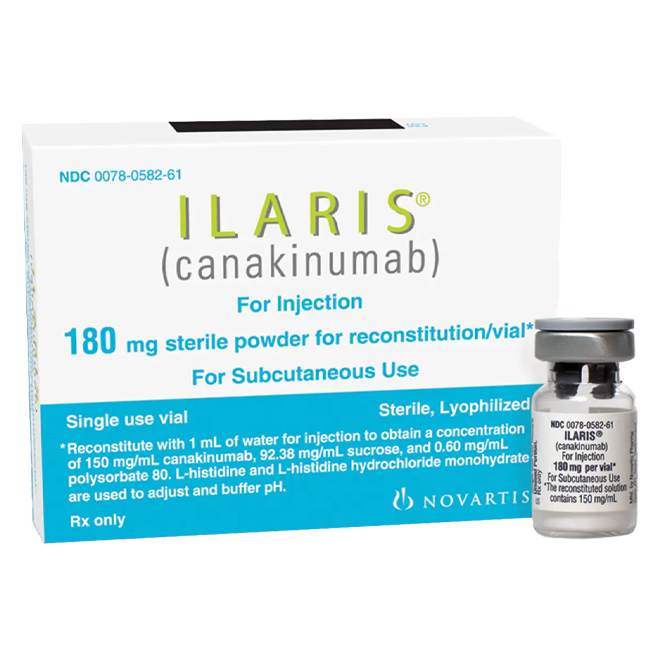


Canakinumab (Ilaris) is a humanized monoclonal antibody that exerts its therapeutic effect by specifically blocking the activity of interleukin-1β (IL-1β), and is primarily indicated for the treatment of various autoinflammatory diseases.
What are the Precautions for Canakinumab (Ilaris) Administration?
Contraindications and Allergic Reactions
Contraindication:Canakinumab is contraindicated in patients with a confirmed history of hypersensitivity to canakinumab or any components of the formulation (e.g., L-histidine, mannitol, etc.).
Monitoring for Severe Allergic Reactions:During treatment, close vigilance is required for severe allergic reactions, including dyspnea, laryngeal edema, severe skin rashes, and hypotension.
Management of Severe Hypersensitivity:In case of severe allergic reaction or drug reaction with eosinophilia and systemic symptoms (DRESS), treatment must be discontinued immediately and medical attention should be sought without delay.
Risk of Severe Infections
Pre-treatment Assessment:Prior to the initiation of treatment, patients must undergo infection screening, including tuberculosis (TB) screening (e.g., tuberculin skin test or interferon gamma release assay).
Management of Active Infections:Canakinumab should not be administered to patients with active infections, especially those requiring medical intervention. If a severe infection develops during treatment, canakinumab must be discontinued immediately.
Recognition of Infection Symptoms:Patients should be educated to recognize the signs of infection (e.g., persistent fever, cough, expectoration, fatigue, local redness, swelling, heat and pain, etc.) and report such symptoms promptly.
Vaccine Administration Management
Prohibition of Live Vaccines:The administration of live vaccines (e.g., measles, rubella, varicella vaccines, etc.) is prohibited during treatment and for a period of time after discontinuation (at least 4–12 months, or until immune function is restored).
Optimal Timing for Vaccination:It is recommended that all appropriate vaccinations (e.g., pneumococcal vaccine, inactivated influenza vaccine) be completed in accordance with current immunization guidelines before the initiation of canakinumab treatment.
Contraindications for Concomitant Medications
Avoidance of Concomitant Use:Co-administration with tumor necrosis factor (TNF) inhibitors (e.g., etanercept, adalimumab, etc.) or other IL-1 blockers (e.g., anakinra, rilonacept) is strictly prohibited, as this may significantly increase the risk of severe infections and neutropenia.
Medications Affecting Hepatic Enzymes:Canakinumab may affect the activity of cytochrome P450 enzymes, particularly for drugs with a narrow therapeutic index (e.g., warfarin). When used concomitantly, close monitoring of drug concentrations or therapeutic efficacy is necessary, with dose adjustments made if required.
Monitoring for Canakinumab (Ilaris) Administration
Routine Clinical Monitoring
Signs of Infection:At each follow-up visit, assessment for signs of infection should be performed. Routine blood tests should be conducted regularly, with attention paid to white blood cell count, neutrophil count and platelet count.
Disease Activity:Relevant indicators should be monitored based on the primary disease, such as C-reactive protein, serum amyloid A, joint symptoms, skin rashes, and frequency of fever, to evaluate treatment efficacy.
Laboratory Parameter Monitoring
Complete Blood Count:Leukopenia, neutropenia or thrombocytopenia may occur during treatment, and regular monitoring is required, especially in the early stage of treatment.
Blood Lipids and Liver Function:Some patients may develop hypertriglyceridemia or elevated liver enzymes. It is recommended to monitor blood lipid levels and liver function (ALT/AST) on a regular basis.
Uric Acid Levels:When used for the treatment of gout, serum uric acid levels should be monitored; however, changes in uric acid levels are not necessarily completely synchronized with improvements in clinical symptoms.