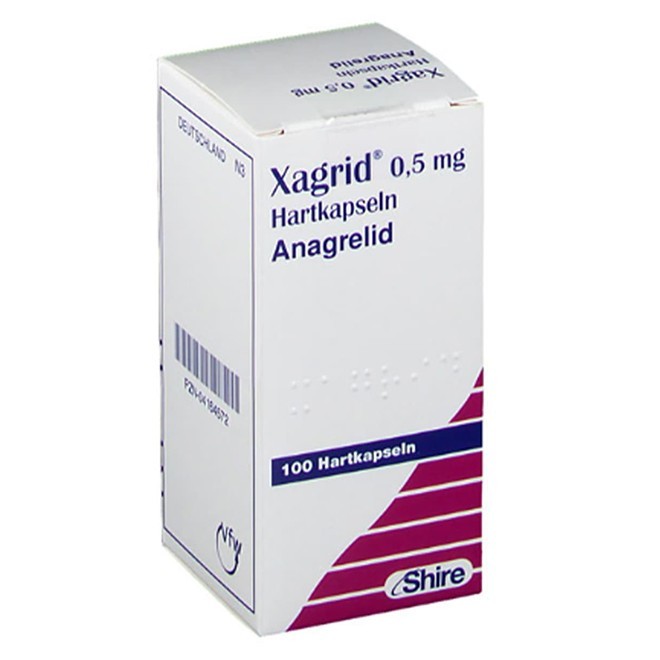


Anagrelide (Agrylin) is a medication indicated for the treatment of secondary thrombocytosis associated with myeloproliferative neoplasms. While demonstrating favorable clinical efficacy, its administration may be accompanied by a series of adverse reactions and potential risks.
Adverse Reactions of Anagrelide (Agrylin)
Common Reactions in Adult Patients (≥5%)
Nervous System: Headache (44%), dizziness (15%), paresthesia (6%).
Cardiovascular System: Palpitations (26%), tachycardia (8%), chest pain (8%).
Gastrointestinal System: Diarrhea (26%), nausea (17%), abdominal pain (16%), vomiting (10%), abdominal distension (10%), anorexia (8%).
General Disorders: Fatigue (23%), edema (21%), pain (15%), pyrexia (9%), peripheral edema (6%).
Respiratory System: Dyspnea (12%), cough (6%).
Pediatric Patients (Aged 7–16 Years)
The main adverse reactions include pyrexia, nasal congestion, headache, fatigue, palpitations, abdominal pain, back pain, anorexia, and muscle spasms.
Serious Adverse Reactions of Anagrelide (Agrylin)
Cardiovascular Toxicity
Anagrelide may prolong the QT interval and induce ventricular tachycardia.
All patients should undergo cardiovascular assessments, including electrocardiography (ECG), prior to treatment. Monitor patients for cardiovascular effects and conduct re-evaluation when necessary. Anagrelide has been shown to prolong the QT interval and increase heart rate in healthy volunteers.
Contraindications: Avoid use in patients with known risk factors for QT interval prolongation, such as congenital long QT syndrome, a history of documented QT interval prolongation, concomitant use of drugs that may prolong the QT interval, and hypokalemia.
Pulmonary Arterial Hypertension
Cases of pulmonary arterial hypertension associated with anagrelide use have been reported.
Prior to initiating treatment, evaluate patients for underlying cardiopulmonary diseases.
Bleeding Risk
Concomitant use of anagrelide with aspirin may increase the risk of bleeding.
Assess the potential risks and benefits of co-administering anagrelide with aspirin or other drugs that increase bleeding risk (e.g., anticoagulants, PDE3 inhibitors, NSAIDs, antiplatelet agents, SSRIs).
Other Serious Reactions
Hematologic System: Thrombocytopenia, anemia, ecchymosis.
Hepatobiliary System: Clinically significant hepatotoxicity (including symptomatic elevations of ALT/AST and elevations exceeding 3 times the upper limit of normal [ULN]).
Renal System: Tubulointerstitial nephritis.
Precautions for Anagrelide (Agrylin)
Use in Special Populations
Pregnancy: Available data have not identified drug-associated major birth defects, miscarriages, or adverse maternal-fetal outcomes.
Lactation: Breastfeeding is not recommended during treatment and for 1 week following the final dose.
Patients with Hepatic Impairment: Dose adjustment is required for patients with moderate to severe hepatic impairment; avoid use in patients with severe hepatic impairment.
Elderly Patients: No specific dose adjustment is required, but elderly patients may be more sensitive to the effects of the drug.
Drug Interactions
Other PDE3 Inhibitors: May potentiate positive inotropic effects.
Aspirin and Other Drugs Increasing Bleeding Risk: Concomitant use may elevate bleeding risk.
CYP1A2 Inhibitors (e.g., fluvoxamine, ciprofloxacin): May increase anagrelide exposure.
CYP1A2 Inducers (e.g., omeprazole): May decrease anagrelide exposure.
Monitoring Requirements
Prior to Treatment: Cardiovascular assessment, electrocardiography (ECG), baseline platelet count.
During Treatment: Platelet count (twice weekly for the first week, then at least once weekly), liver function, renal function, electrolytes.
Patients with Hepatic Impairment: Frequently monitor for QT interval prolongation and other cardiovascular adverse reactions.