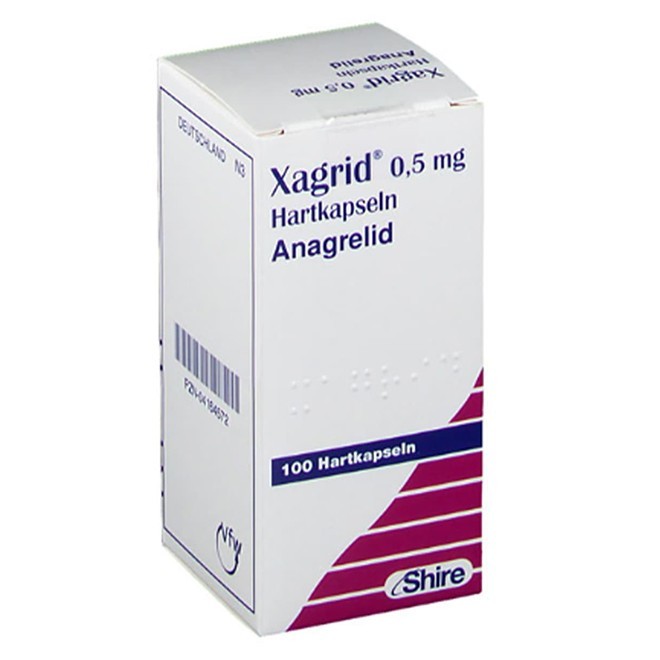


Anagrelide (Agrylin) is a prescription medication indicated for the treatment of thrombocytosis. Correct administration and dosage are crucial to its therapeutic efficacy and safety.
Dosage and Administration, Recommended Dosage of Anagrelide (Agrylin)
General Dosage and Administration
The usual administration regimen for anagrelide is once daily, preferably taken in the morning.
The capsules should be swallowed whole and must not be chewed or crushed.
For patients who are unable to swallow the capsules whole, the capsules can be opened and the granules mixed with one tablespoon of applesauce. The mixture should be consumed within 30 minutes and immediately followed by an 8-ounce glass of cool water.
Therapeutic Dosage for Active Thrombocytosis
For adult patients with mild to moderately active thrombocytosis, the recommended dosage is 9 mg daily, with a treatment course not exceeding 8 weeks.
For pediatric patients aged 8 to 17 years and weighing over 25 kg, the recommended dosage is 9 mg daily for 8 weeks, followed by a dose reduction to 6 mg daily for the subsequent 2 weeks.
Dosage Adjustment of Anagrelide (Agrylin)
Patients with Hepatic Impairment
For adult patients with moderate hepatic impairment (Child-Pugh Class B), consideration should be given to reducing the dosage to 3 mg daily.
The use of this medication is contraindicated in patients with severe hepatic impairment (Child-Pugh Class C).
Patients with Renal Impairment
For adult and pediatric patients aged 2 years and older with renal impairment, dosage adjustments are as follows: a 25% dosage reduction is recommended for mild renal impairment (CLcr > 50–80 mL/min).
A 50% dosage reduction is required for moderate renal impairment (CLcr > 30–50 mL/min).
A 75% dosage reduction is necessary for severe renal impairment (CLcr > 10–30 mL/min).
Medication Use in Special Populations of Anagrelide (Agrylin)
Use in Pregnant Women
Based on animal data, anagrelide may cause fetal harm.
It may be used during pregnancy only if the potential benefit clearly outweighs the potential risk.
Fetal monitoring is recommended during the course of treatment.
Use in Lactating Women
Anagrelide is excreted in human breast milk and may exert adverse effects on the nursing infant.
Lactating women should weigh the potential benefits against the risks before deciding whether to continue breastfeeding.