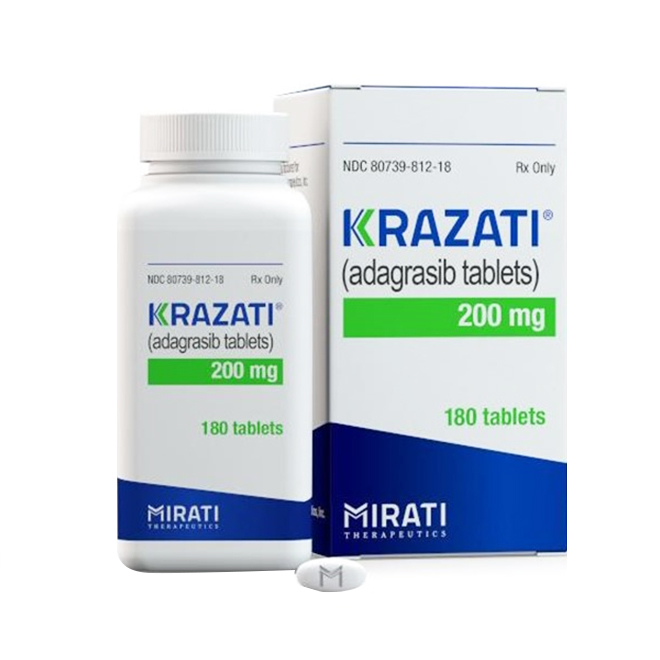


Adagrasib is an irreversible inhibitor of KRASG12C, primarily indicated for the treatment of locally advanced or metastatic non-small cell lung cancer (NSCLC) and colorectal cancer (CRC) with KRASG12C mutation confirmed by FDA-approved testing.
Precautions for Adagrasib Administration
Risk of QT Interval Prolongation on Electrocardiogram (ECG)
Adagrasib can cause QT interval prolongation, increasing the risk of ventricular tachycardia (e.g., torsades de pointes) or sudden cardiac death.
Concomitant use of adagrasib with other products known to potentially prolong the QT interval is strictly prohibited.
This medication should be avoided in patients with congenital long QT syndrome and those with concurrent QTc prolongation.
During treatment, regular monitoring of ECG and electrolyte levels—especially potassium and magnesium concentrations—is required.
Gastrointestinal Adverse Reactions
Adagrasib may cause severe gastrointestinal adverse reactions.
In the pooled safety population receiving adagrasib monotherapy, 89% of patients experienced nausea, diarrhea, or vomiting, with 9% of these reactions being Grade 3.
These adverse reactions led to 29% of patients requiring treatment interruption or dose reduction.
Hepatotoxic Reactions
The medication may cause hepatotoxicity, which can further lead to drug-induced liver injury and hepatitis.
Among patients receiving adagrasib monotherapy, 32% had elevated alanine aminotransferase (ALT)/aspartate aminotransferase (AST), with 5% being Grade 3 and 0.5% being Grade 4.
Risk of Interstitial Lung Disease (ILD)/Pneumonitis
Adagrasib can cause ILD/pneumonitis, which may be fatal.
In patients receiving adagrasib monotherapy, the incidence of ILD/pneumonitis was 4.1%, with 1.4% being Grade 3 or 4, and one fatal case was reported.
Lactating Patients
There are no data on the presence of adagrasib or its metabolites in human milk.
Due to the potential risk of serious adverse reactions in breastfed children, women are advised not to breastfeed during KRAZATI treatment and for 1 week after the last dose.
Patients with Hepatic or Renal Impairment
Patients with cirrhosis should use adagrasib with caution.
Patients with mild to severe renal impairment or mild to severe hepatic impairment are not expected to have clinically significant pharmacokinetic differences.
Drug Interactions
Strong CYP3A4 Inducers: Concomitant use of adagrasib with strong CYP3A inducers should be avoided, as they may reduce adagrasib exposure and thereby diminish therapeutic efficacy.
Strong CYP3A4 Inhibitors: Concomitant use with strong CYP3A inhibitors should be avoided until adagrasib reaches steady-state concentration (approximately after 8 days).
Sensitive CYP3A Substrates: Concomitant use with sensitive CYP3A substrates should be avoided unless specified in the prescribing information of these substrates.
Monitoring for Adagrasib Administration
ECG Monitoring
Monitor ECG before initiating adagrasib, during concurrent medication use, and when clinically necessary.
ECG monitoring should be performed in patients with congestive heart failure, bradyarrhythmia, electrolyte abnormalities, and those who cannot avoid using drugs known to prolong the QT interval.
Hepatic Function Monitoring
Monitor liver function tests before initiating adagrasib and monthly for the first 3 months of treatment.
Monitoring includes AST, ALT, alkaline phosphatase, and total bilirubin. For patients with elevated transaminases, the frequency of monitoring should be increased.