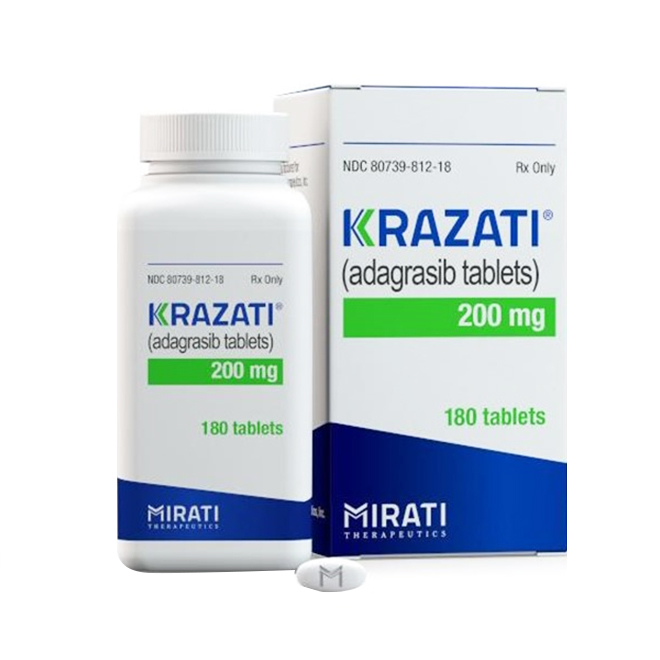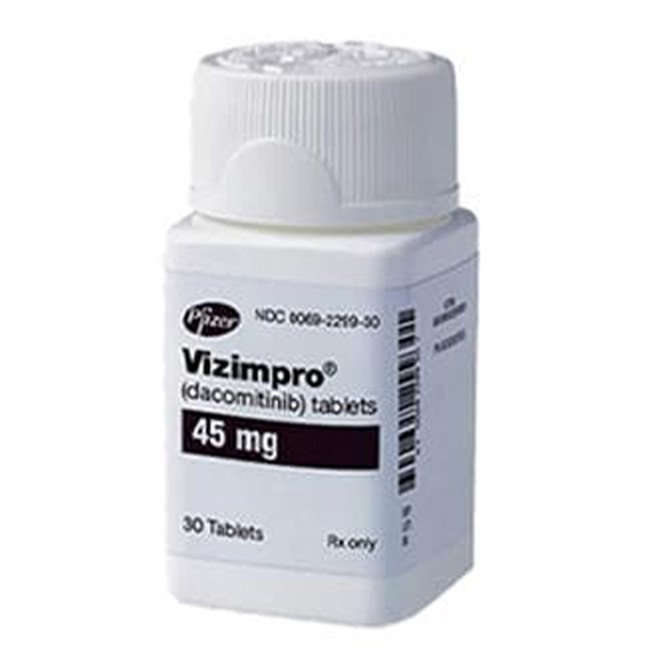


Adagrasib is an irreversible inhibitor of KRASG12C mutation, indicated for the treatment of locally advanced or metastatic non-small cell lung cancer (NSCLC) and colorectal cancer (CRC) with KRASG12C mutation confirmed by FDA-approved testing.
Side Effects of Adagrasib
Monotherapy for Non-Small Cell Lung Cancer (NSCLC)
Nausea (70%).
Diarrhea (69%).
Vomiting (57%).
Fatigue (55%).
Musculoskeletal pain (38%).
Lymphopenia (20%).
Decreased hemoglobin (7%).
Increased alanine aminotransferase (4.5%).
Combination Therapy with Cetuximab for Colorectal Cancer (CRC)
Rash (84%).
Nausea (68%).
Diarrhea (65%).
Vomiting (57%).
Fatigue (57%).
Musculoskeletal pain (47%).
Severe Side Effects of Adagrasib
Severe Gastrointestinal Adverse Reactions
In monotherapy: The incidence of severe gastrointestinal bleeding is 3.8% (0.8% being Grade 3 or 4), gastrointestinal obstruction is 1.6% (1.4% being Grade 3 or 4), colitis is 0.5% (0.3% being Grade 3), intestinal obstruction is 0.5%, and stricture is 0.3%.
In combination therapy: The incidence of severe gastrointestinal bleeding increases to 8.5% (1.1% being Grade 3 or 4), and gastrointestinal obstruction is 5.3% (all being Grade 3 or 4).
Risk of Hepatotoxicity
In monotherapy: 32% of patients experience elevated ALT/AST (5% being Grade 3, 0.5% being Grade 4).
The incidence of drug-induced liver injury is 0.3% (0.3% being Grade 3).
Precautions for Adagrasib
Contraindications and High-Risk Populations
Contraindicated in patients with congenital long QT syndrome.
Contraindicated in patients with prolonged QTc interval.
Patients with abnormal liver function require close monitoring.
Drug Interactions
Strong CYP3A4 inducers: Avoid concurrent use.
Strong CYP3A4 inhibitors: Avoid use until adagrasib reaches steady-state concentration (approximately 8 days).
Sensitive CYP3A4 substrates: Avoid concurrent use.
Sensitive CYP2C9 or CYP2D6 substrates: Avoid concurrent use.
P-gp substrates: Avoid concurrent use.
Drugs that prolong QT interval: Avoid concurrent use.
Monitoring Requirements
Regularly monitor electrocardiogram (ECG) and electrolytes before and during treatment.
Monitor liver function monthly before the start of treatment and within 3 months after treatment initiation, and thereafter as clinically needed.
Closely monitor for new or worsening respiratory symptoms.
Clinical Management Recommendations
In case of Grade 3 or 4 gastrointestinal adverse reactions, suspend drug administration until symptoms resolve to ≤ Grade 1 or return to baseline.
When the absolute value of QTc > 500 milliseconds or increases by > 60 milliseconds compared with baseline, suspend drug administration until QTc interval < 481 milliseconds or returns to baseline.
For abnormal liver function, adjust the dose according to the severity of the condition.