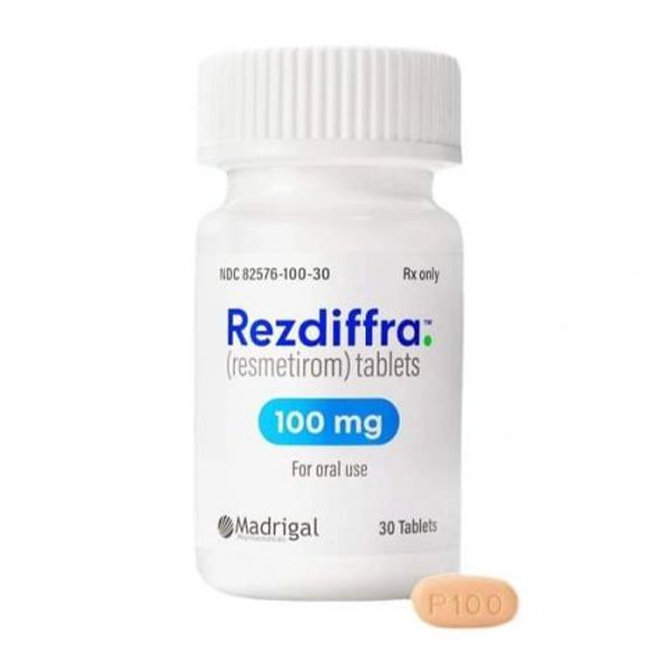


Resmetirom (Rezdiffra) is the first thyroid hormone receptor-beta agonist approved by the U.S. FDA in 2024 through the accelerated approval pathway for the treatment of non-cirrhotic non-alcoholic steatohepatitis (NASH) with moderate to advanced liver fibrosis, and it has demonstrated significant efficacy in clinical application. Coexisting with its efficacy are potential risks of side effects, especially severe adverse reactions that require high vigilance.
What Are the Side Effects of Resmetirom (Rezdiffra)?
Gastrointestinal Reactions
Diarrhea.
Nausea.
Vomiting.
Constipation.
Abdominal pain.
Other Frequently Occurring Reactions
Pruritus (itching).
Dizziness.
Rash.
Severe Side Effects of Resmetirom (Rezdiffra)
Hepatotoxic Reactions
Alanine Aminotransferase (ALT) elevation up to 58 times the upper limit of normal (ULN).
Aspartate Aminotransferase (AST) elevation up to 66 times the ULN.
Total bilirubin elevation up to 15 times the ULN.
Key note: Immediate discontinuation of the drug and continuous monitoring of liver function are required, and vigilance against drug-induced autoimmune-like hepatitis is necessary.
Gallbladder-Related Events
Management principle: In case of acute gallbladder events, medication should be suspended until symptoms are completely resolved.
Precautions for Using Resmetirom (Rezdiffra)
Individualized Dosing Regimen
Patients with body weight < 100 kg: 80 mg per day.
Patients with body weight ≥ 100 kg: 100 mg per day.
Dose reduction is required when used concomitantly with moderate CYP2C8 inhibitors: 60 mg per day for patients < 100 kg, and 80 mg per day for patients ≥ 100 kg.
Contraindicated and Special Populations Requiring Caution
Absolute contraindication: Decompensated cirrhosis (Child-Pugh Class B/C).
Special warning: The plasma concentration of the drug may increase by 19 times in patients with moderate to severe liver impairment.
Management of Drug Interactions
Concomitant use is prohibited with:
Strong CYP2C8 inhibitors (e.g., gemfibrozil).
OATP1B1/1B3 inhibitors (e.g., cyclosporine).
Statin Dosage Adjustments
Rosuvastatin/simvastatin: Maximum daily dose ≤ 20 mg.
Pravastatin/atorvastatin: Maximum daily dose ≤ 40 mg.
Laboratory Monitoring Requirements
Baseline and regular testing during treatment: Liver function, gallbladder ultrasound, thyroid function.
Key indicators to focus on: ALT, AST, total bilirubin, free thyroxine (FT4).
Key Points for Patient Education
Recognize symptoms of hepatotoxicity: Unusual fatigue, right upper abdominal pain, jaundice, fever, rash.
Warning signs of gallbladder events: Persistent abdominal pain accompanied by vomiting and radiating pain.
Timely reporting mechanism: Contact the medical team immediately if severe side effects occur.