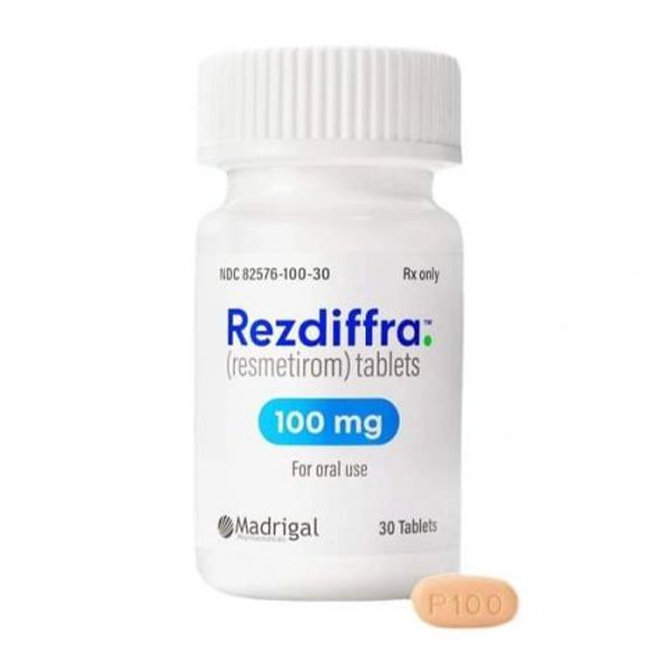


Resmetirom (Rezdiffra) is a thyroid hormone receptor-beta (THR-β) agonist and the first targeted drug approved for the treatment of non-cirrhotic non-alcoholic steatohepatitis (NASH) with moderate to advanced liver fibrosis. Although this medication demonstrates significant efficacy in improving liver inflammation and fibrosis, it carries potential risks during use, such as hepatotoxicity and gallbladder-related adverse reactions. Therefore, a comprehensive medication monitoring system must be established.
Precautions for Using Resmetirom (Rezdiffra)
Hepatotoxic Reactions
Resmetirom may cause drug-induced autoimmune-like hepatitis (DI-ALH).
Liver function tests: Alanine Aminotransferase (ALT), Aspartate Aminotransferase (AST), total bilirubin, and Alkaline Phosphatase (ALP).
Clinical symptoms: Fatigue, nausea, vomiting, right upper abdominal pain or tenderness, jaundice, fever, rash, and/or eosinophilia (>5%).
If hepatotoxicity is suspected, discontinue the medication immediately and continuously monitor liver function indicators. If laboratory values return to baseline, the risk-benefit ratio of restarting treatment must be re-evaluated.
Gallbladder-Related Adverse Reactions
Immediately discontinue treatment until the event is resolved.
Conduct diagnostic tests for the gallbladder.
Establish a standardized clinical follow-up mechanism.
Individualized Dosage Regimen
Body weight < 100 kg: The recommended dosage is 80 mg once daily.
Body weight ≥ 100 kg: The recommended dosage is 100 mg once daily.
Administration route: Oral. The medication can be taken with food or on an empty stomach.
Management of Drug Interactions
Strong CYP2C8 inhibitors (e.g., gemfibrozil): Concomitant use is prohibited.
Moderate CYP2C8 inhibitors (e.g., clopidogrel): Dosage adjustment is required.
Concomitant use with statins: Daily dosage limitation is necessary.
Medication Monitoring for Resmetirom (Rezdiffra)
Standards for Liver Function Monitoring
Baseline assessment: Before the start of treatment.
Treatment-phase monitoring: Conduct regular tests of liver biochemical indicators.
Symptom monitoring: Closely observe clinical manifestations related to hepatotoxicity.
Tracking of Laboratory Indicators
Thyroid function: Monitor changes in free thyroxine (FT4) levels.
Lipid monitoring: Pay attention to statin-related adverse reactions.
Complete blood count: Focus on monitoring indicators related to anemia.
Key Points for Patient and Family Education
Popularize knowledge on medication safety.
Explain in detail the risk characteristics of hepatotoxicity.
Guide the identification of symptoms of gallbladder-related adverse reactions.
Establish a reporting mechanism for emergency situations.