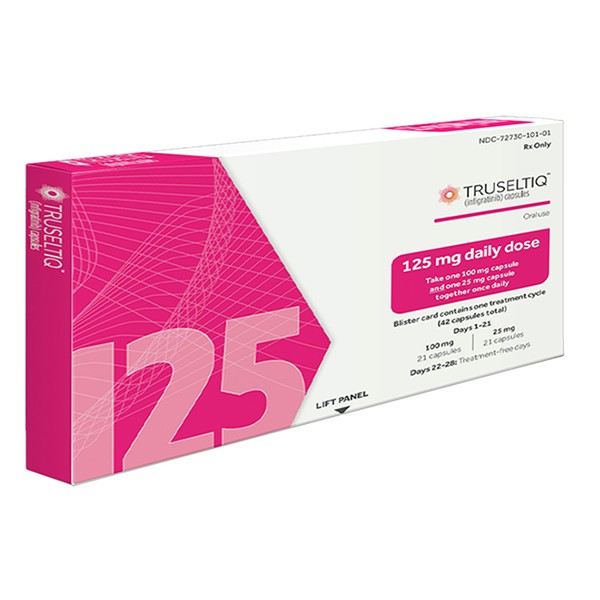


Infigratinib has shown clear efficacy in the treatment of FGFR2-mutant cholangiocarcinoma, but may also cause various side effects.
I. Common Side Effects
1. Ocular Side Effects:
(1) The most common ocular side effects are dry eye (approximately 29%), followed by blurred vision (21%), and eyelash changes (25%).
(2) About 11% of patients develop retinal pigment epithelial detachment, which may present as blurred vision or be asymptomatic, with a median time to onset of 26 days after starting treatment.
2. Hyperphosphatemia and Soft Tissue Calcification:
(1) Approximately 82% of patients experience elevated serum phosphorus, with a median time to onset of 8 days.
(2) Severe hyperphosphatemia can lead to calcification of soft tissues, blood vessels, and even the myocardium.
3. Skin and Nail Toxicity:
Nail toxicity (e.g., onycholysis, paronychia) occurs in 57%, hand-foot skin reaction in 33%, alopecia in 38%, and dry skin in 23%.
4. Oral and Gastrointestinal Reactions:
Stomatitis (mouth ulcers) occurs in 56%, constipation in 30%, abdominal pain in 26%, dry mouth in 25%, diarrhea in 24%, and vomiting in 21%.
5. Systemic and Other Common Reactions:
Fatigue in 44%, arthralgia in 32%, dysgeusia in 32%, decreased appetite in 22%. Laboratory abnormalities include elevated creatinine (93%), anemia (53%), and abnormal liver function (approximately 50%).
II. Methods to Alleviate Side Effects
1. Management of Ocular Problems:
(1) Use artificial tears or lubricating eye gels as needed to relieve dry eye.
(2) Undergo ophthalmic examinations (including OCT) before treatment and at months 1 and 3, then every 3 months thereafter.
(3) Seek immediate medical attention if blurred vision occurs; the doctor may temporarily suspend or reduce the dose.
2. Management of Hyperphosphatemia:
(1) When serum phosphorus > 5.5 mg/dL, initiate phosphate-lowering therapy (e.g., phosphate binders); if > 7.5 mg/dL, temporarily suspend the drug and intensify phosphate lowering.
(2) Upon resuming treatment, the original dose may be maintained or reduced.
(3) Note: During the off-treatment week (days 22-28), phosphate binders should be paused.
3. Care for Oral Mucositis:
(1) Clean the mouth daily with mild mouthwash (e.g., saline), avoiding irritating foods.
(2) If symptoms are significant, the doctor may reduce or temporarily suspend the drug.
4. Skin and Nail Care:
(1) Keep skin on hands and feet clean and dry, wear loose shoes and socks, and avoid prolonged friction.
(2) Avoid over-trimming nails and exposure to chemical irritants when nails are brittle.
(3) Apply moisturizing cream locally.
5. Alleviation of Gastrointestinal Symptoms:
(1) For constipation, increase dietary fiber and water intake; for diarrhea, ensure adequate fluid and electrolyte replacement; for abdominal pain, consult a doctor about symptomatic medications.
(2) Choose light, easy-to-digest foods for nausea and vomiting.
6. Monitoring of Laboratory Abnormalities:
(1) Regularly check complete blood count, liver and kidney function, electrolytes, and lipids.
(2) Most abnormalities are grade 1-2 and can be managed with dose adjustment and supportive care.
III. Drug Storage Environmental Requirements
1. Temperature Conditions:
(1) Store at room temperature between 20°C and 25°C (68°F to 77°F); excursions permitted between 15°C and 30°C (59°F to 86°F).
(2) Avoid freezing or exposure to high temperatures and direct sunlight.
2. Packaging and Storage:
(1) Keep in the original container, tightly closed, and out of reach of children.
(2) Each 21-day supply is provided in a blister card package, with corresponding cartons for different dosage strengths.