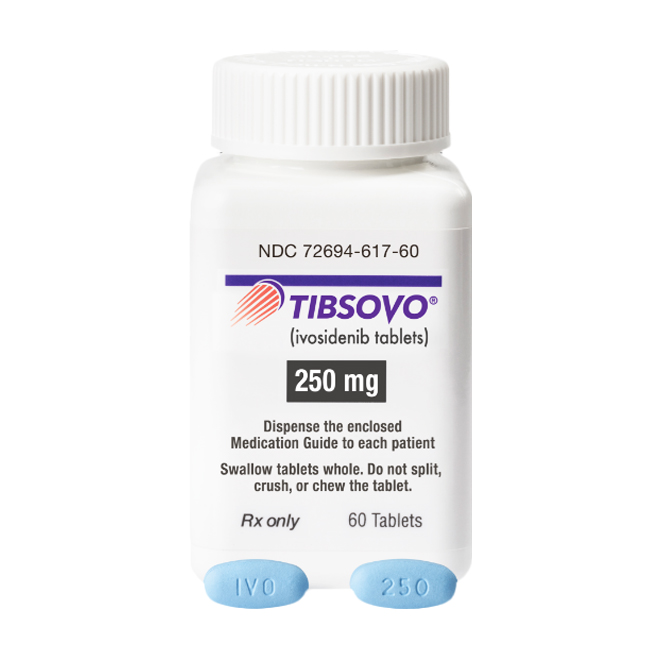


Ivosidenib (Tibsovo) is a targeted inhibitor of isocitrate dehydrogenase 1 (IDH1), demonstrating significant efficacy in the treatment of acute myeloid leukemia, myelodysplastic syndromes, and cholangiocarcinoma harboring IDH1 mutations. Like many antineoplastic agents, while delivering therapeutic benefits, ivosidenib is also associated with non-negligible safety risks.
Adverse Reactions of Ivosidenib (Tibsovo)
Hematological Toxicities
Leukopenia: incidence rate up to 65%.
Hemoglobin decrease: incidence rate 56%.
Thrombocytopenia: incidence rate 58%.
Neutropenia: incidence rate 25%.
Gastrointestinal System Reactions
Diarrhea: incidence rate as high as 42%.
Nausea: incidence rate 41%.
Vomiting: incidence rate 23%.
Metabolic and Biochemical Abnormalities
Increased alkaline phosphatase: incidence rate 32%.
Increased aspartate aminotransferase: incidence rate 37%.
Hypokalemia: incidence rate 43%.
Hyponatremia: incidence rate 39%.
Severe Adverse Reactions of Ivosidenib (Tibsovo)
Differentiation Syndrome
Differentiation syndrome is the most severe and potentially fatal adverse reaction associated with ivosidenib therapy. It can occur as early as 1 day after initiation of treatment and as late as 3 months following the start of therapy.
Clinical manifestations are diverse, including fever, dyspnea, hypoxia, pulmonary infiltrates, pleural or pericardial effusion, rapid weight gain or peripheral edema, hypotension, and hepatic, renal, or multi-organ dysfunction.
Cardiac Electrophysiological Abnormalities
QT interval prolongation is another serious safety concern requiring close attention during ivosidenib treatment.
Among newly diagnosed acute myeloid leukemia (AML) patients receiving ivosidenib in combination with azacitidine, 14% developed a QTcF interval greater than 500 milliseconds, and 22% experienced a QTcF interval increase of more than 60 milliseconds from baseline.
A very small number of patients may develop life-threatening arrhythmias such as ventricular fibrillation.
Guillain-Barré Syndrome
This rare but severe neurological complication has an incidence rate of 0.8% in clinical trials.
Patients may present with new-onset motor or sensory neurological symptoms, including unilateral or bilateral weakness, sensory changes, paresthesia, or dyspnea.
Precautions for Ivosidenib (Tibsovo)
Pre-treatment Assessment and Patient Selection
Confirmation of IDH1 mutation status via an FDA-approved detection method is mandatory before the administration of ivosidenib.
Baseline electrocardiogram (ECG) assessment is essential, and continuous ECG monitoring should be performed during treatment—at least once weekly for the first 3 weeks, then at least once monthly thereafter.
Adequate patient education must be provided to ensure they understand the early symptoms of differentiation syndrome. Patients should be advised to seek immediate medical attention if they develop fever, cough, dyspnea, rash, decreased urine output, hypotension, rapid weight gain, or limb swelling.
Drug Interactions
Co-administration of ivosidenib with strong or moderate CYP3A4 inhibitors may increase its plasma concentration, thereby elevating the risk of QT interval prolongation. Concurrent use should be avoided as much as possible.
If co-administration with a strong CYP3A4 inhibitor is unavoidable, the dose of ivosidenib should be reduced to 250 mg once daily.
Ivosidenib is an inducer of CYP3A4, which may decrease the concentration of hormonal contraceptives. Alternative contraceptive measures should be adopted during treatment.