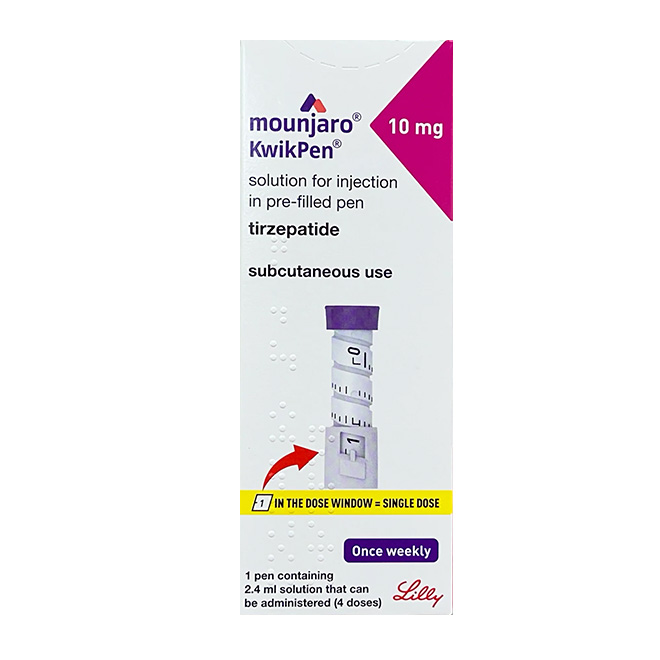


Tirzepatide is a long-acting dual GIP/GLP-1 receptor agonist. It promotes insulin secretion and inhibits glucagon release through a glucose concentration-dependent mechanism, and is mainly used for blood glucose control in type 2 diabetes.
How to Use Tirzepatide
Initial and Maintenance Doses
Initial Phase: The first dose is a weekly subcutaneous injection of 2.5mg, which is continuously administered for 4 weeks as an adaptation period for dose escalation.
Core Treatment: Starting from week 5, adjust to a weekly dose of 5mg, which is the standard maintenance dose.
Injection Site Selection: Rotate injections among the abdomen, thigh, or upper arm; intravenous or intramuscular injection is prohibited.
Dose Escalation Mechanism
If the efficacy of 5mg is insufficient, the dose can be gradually increased in 2.5mg steps with an interval of ≥4 weeks.
Dose Range: Six specifications are available: 2.5/5/7.5/10/12.5/15mg.
Maximum Limit: The weekly dose shall not exceed 15mg.
Dose Adjustment of Tirzepatide
Efficacy-Based Adjustment
Continuous blood glucose monitoring (HbA1c) and body weight changes are key evaluation indicators.
Before each dose increase, the patient's tolerance, especially gastrointestinal reactions, must be confirmed.
Missed Dose Management
If the time to the next dose is ≥72 hours: Inject the missed dose immediately and then resume the original schedule.
If the time to the next dose is <72 hours: Skip the missed dose and inject as planned for the next dose.
Discontinuation Indications
Permanent discontinuation is required in case of acute pancreatitis, severe allergic reactions, or persistent severe gastrointestinal adverse reactions.
Medication Use in Special Populations for Tirzepatide
Patients with Hepatic or Renal Impairment
Mild Hepatic Impairment (Child-Pugh Class A): Use with caution and strengthen monitoring.
Moderate to Severe Hepatic Impairment (Child-Pugh Class B/C): Prohibited.
Renal Impairment: No dose adjustment is required for patients with a creatinine clearance rate ≥30mL/min.
Pregnant and Lactating Women, and Children
Pregnant Women: Absolutely prohibited; insulin therapy must be substituted.
Lactating Women: The drug can be secreted into breast milk; it is recommended to suspend breastfeeding or discontinue the medication.
Children: Lack of efficacy data; prohibited to use.
Other High-Risk Populations
Patients with Gastrointestinal Diseases: Prohibited for those with severe gastroparesis; use with caution for those with a history of pancreatitis.
Thyroid Diseases: Prohibited for individuals with a personal or family history of medullary thyroid carcinoma.
Patients with Cardiovascular Risks: Monitor changes in heart rate and blood pressure closely.