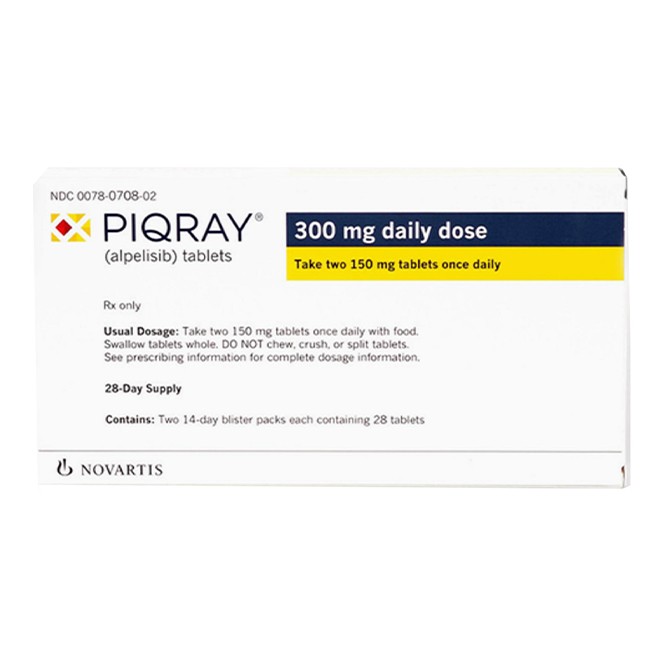


Alpelisib (Piqray) is a kinase inhibitor, first approved in the United States in 2019. Used in combination with fulvestrant, this medication provides an important targeted treatment option for patients with hormone receptor-positive, HER2-negative, PIK3CA-mutated advanced breast cancer.
How to Use Alpelisib (Piqray)
Recommended Dosage and Administration Route
Standard dosage: 300 mg orally once daily (two 150 mg film-coated tablets), to be taken with food.
Treatment duration: Continue treatment until disease progression or unacceptable toxicity occurs.
Administration Instructions
Take the medication at approximately the same time each day.
Swallow the tablets whole; do not chew, crush, or split them.
Do not take the tablets if they are broken, cracked, or damaged in terms of integrity.
Management of Special Administration Scenarios
Missed dose: If a dose is missed, it can be taken with food within 9 hours after the usual administration time. If more than 9 hours have passed, skip the missed dose and take the next dose at the regular time the following day.
Vomiting after administration: If vomiting occurs after taking the medication, do not take an additional dose on the same day; resume the regular dosing schedule at the usual time the next day.
Combination medication: When used with alpelisib, the recommended dose of fulvestrant is 500 mg, administered on Days 1, 15, and 29, followed by once monthly thereafter.
Dosage Adjustment of Alpelisib (Piqray)
Dosage Reduction
Starting dose: 300 mg once daily (two 150 mg tablets).
First reduction: 250 mg once daily (one 200 mg tablet and one 50 mg tablet).
Second reduction: 200 mg once daily (one 200 mg tablet).
For pancreatitis, only one dose level reduction is allowed. If further reduction below 200 mg once daily is needed, alpelisib must be permanently discontinued.
Management of Skin Adverse Reactions
Grade 1: No adjustment to alpelisib dosage is required; initiate topical corticosteroid treatment.
Grade 2: No adjustment to alpelisib dosage is required; initiate or intensify topical medication and oral antihistamine treatment.
Grade 3: Discontinue alpelisib temporarily; initiate or intensify topical/systemic corticosteroid and oral antihistamine treatment.
Grade 4: Permanently discontinue alpelisib.
Management of Hyperglycemia
Before initiating alpelisib treatment, measure fasting blood glucose and HbA1c, and optimize blood glucose levels.
Consider pre-treatment with metformin before starting alpelisib, based on the patient’s hyperglycemia risk factors, gastrointestinal tolerance, and clinical conditions.
After starting treatment, monitor fasting blood glucose at least once weekly for the first 2 weeks, then at least once every 4 weeks thereafter; monitor HbA1c every 3 months.
Alpelisib (Piqray) Usage in Special Populations
Usage in Reproductive-Age Populations
Pregnant women: Based on animal study data and its mechanism of action, alpelisib may cause fetal harm when administered to pregnant women. Pregnant women and women of childbearing potential should be informed of the potential risks to the fetus.
Lactating women: There are currently no data on whether alpelisib is present in human milk, its effects on breastfed infants, or its impact on milk production. It is recommended not to breastfeed during alpelisib treatment and for 1 week after the last dose.
Renal Impairment
No dosage adjustment is required for patients with mild to moderate renal impairment.
The impact of severe renal impairment on the pharmacokinetics of alpelisib is not yet clear.