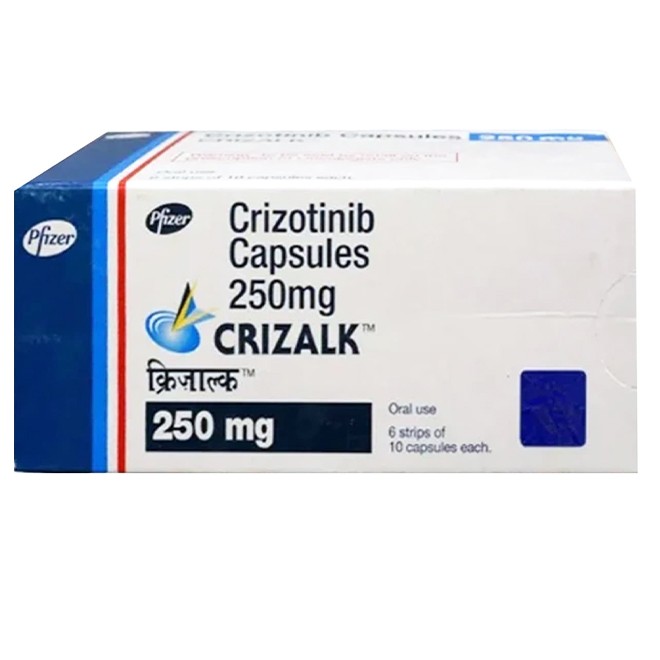


Crizotinib is a multi-target tyrosine kinase inhibitor, primarily indicated for the treatment of ALK-positive or ROS1-positive non-small cell lung cancer (NSCLC), ALK-positive anaplastic large cell lymphoma (ALCL), and ALK-positive inflammatory myofibroblastic tumor (IMT).
Dosage and Administration of Crizotinib
Dosage Standards for Different Indications
Non-Small Cell Lung Cancer (NSCLC): The recommended dosage for adults is 250mg orally, twice daily, either with food or on an empty stomach.
Anaplastic Large Cell Lymphoma (ALCL): For pediatric patients aged 1 year and older and young adult patients, the dosage is calculated based on body surface area, with a standard of 280mg/m² orally, twice daily.
Inflammatory Myofibroblastic Tumor (IMT)
Adult Patients: 250mg orally, twice daily.
Pediatric Patients Aged 1 Year and Older: 280mg/m² orally, twice daily.
Dosage Form Specifications and Administration Methods
Capsule Dosage Form: Available in two specifications: 200mg and 250mg. The capsules must be swallowed whole; do not chew, crush, or split them.
Oral Pellet Dosage Form: Available in three specifications: 20mg, 50mg, and 150mg. For administration, open the capsule shell, pour the pellets directly into the mouth, or use a dosing spoon or medicine cup for assistance. After taking the pellets, drink a sufficient amount of water immediately to ensure complete swallowing.
Dosage Adjustment of Crizotinib
Adult Patients with NSCLC and IMT
First Dose Reduction: 200mg twice daily.
Second Dose Reduction: 250mg once daily.
If the 250mg once-daily dosage is still not tolerable, permanent discontinuation of the drug is required.
Adjustment for Hematological Toxicity
Grade 3: Suspend drug administration until toxicity resolves to Grade 2 or lower, then resume the original dosage. If febrile neutropenia occurs, reduce to the next lower dosage level after recovery.
Adjustment for Non-Hematological Toxicity: For specific adverse reactions such as hepatotoxicity, ILD/pneumonitis, QT interval prolongation, and bradycardia, measures including drug suspension, dose reduction, or permanent discontinuation should be taken based on the severity.
Patients with Hepatic Impairment
Moderate Hepatic Impairment: Adopt the first dose reduction regimen.
Severe Hepatic Impairment: Adopt the second dose reduction regimen.
Medication for Special Populations of Crizotinib
Patients with Hepatic Impairment
Moderate Hepatic Impairment (AST and total bilirubin > 1.5× upper limit of normal [ULN] and ≤ 3× ULN): Adopt the first dose reduction regimen.
Patients with Renal Impairment
Mild to Moderate Renal Impairment: No dosage adjustment is required.
Severe Renal Impairment: Dose reduction is required.
Pregnant and Lactating Women
Pregnancy: Contraindicated. Based on its mechanism of action, crizotinib may cause fetal harm when administered to pregnant women.