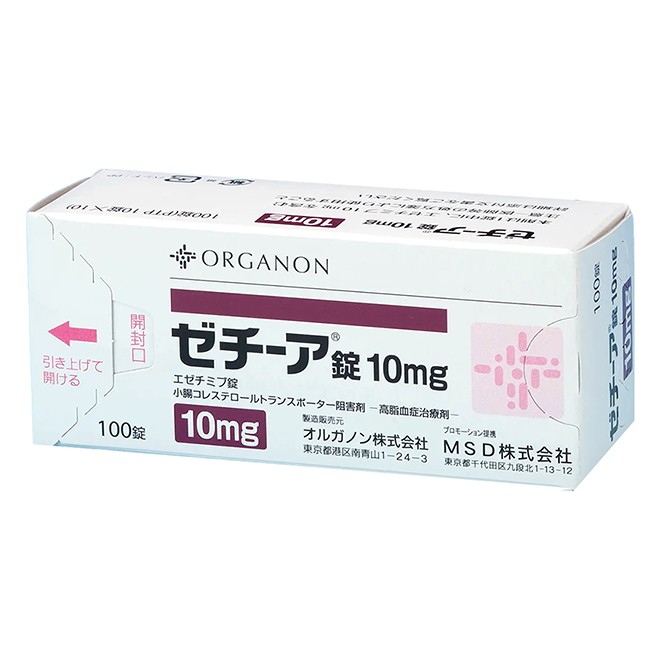


Ezetimibe (Zetia) is a selective cholesterol absorption inhibitor that effectively inhibits the absorption of dietary and biliary cholesterol by acting on the Niemann-Pick C1-Like 1 (NPC1L1) protein at the brush border of the small intestine.
How to Use Ezetimibe (Zetia)
Administration Regimen
The recommended dose is 10 mg orally once daily.
It can be taken with or without food, as food does not affect its bioavailability.
Missed Dose Handling: Take the missed dose as soon as it is remembered. Do not double the dose at the next scheduled time.
Timing for Combined Medication Use
Take at least 2 hours before administering bile acid sequestrants.
Or take at least 4 hours after administering bile acid sequestrants.
Efficacy Monitoring Interval
Clinical evaluation should be performed as early as possible after initiating treatment. Low-density lipoprotein cholesterol (LDL-C) levels can be measured as early as 4 weeks after starting the medication to assess treatment response and adjust the treatment plan accordingly.
Dosage Adjustments for Ezetimibe (Zetia)
General Adjustment Principles
The initial treatment dose is a fixed 10 mg once daily for all patients.
Dose escalation based on routine treatment response is not required.
Maintain dose stability during continuous treatment.
Adjustments Based on Liver Function
No dose adjustment is needed for patients with mild hepatic impairment.
Use is not recommended for patients with moderate to severe hepatic impairment.
Discontinuation of the drug should be considered if alanine transaminase (ALT) or aspartate transaminase (AST) persistently exceeds 3 times the upper limit of normal.
Use in Special Populations
Pediatric Patients
Patients aged 10 years and older with heterozygous familial hypercholesterolemia (HeFH): Use in combination with statins.
Patients aged 10 years and older with homozygous familial hypercholesterolemia (HoFH): Use in combination with statins and other LDL-C-lowering therapies.
Patients aged 9 years and older with homozygous familial sitosterolemia: Monotherapy.
Patients with Renal Impairment
No dose adjustment is required for patients with any degree of renal impairment.
Pharmacokinetic studies in patients with severe renal disease show that the mean area under the curve (AUC) of total ezetimibe is approximately 1.5 times higher than that in healthy subjects, but this change is not clinically significant, and no dose adjustment is necessary.
Use During Pregnancy
Currently, there is insufficient data on the use of ezetimibe in pregnant women to evaluate the risks of drug-related major birth defects, miscarriage, or adverse maternal-fetal outcomes.
Use during pregnancy is only recommended if the potential benefit outweighs the potential risk to the fetus.
Use During Lactation
The drug is present in rat milk. When a drug is present in animal milk, it is likely to be present in human milk.
Ezetimibe should not be used in breastfeeding mothers unless the potential benefit outweighs the potential risk to the infant.