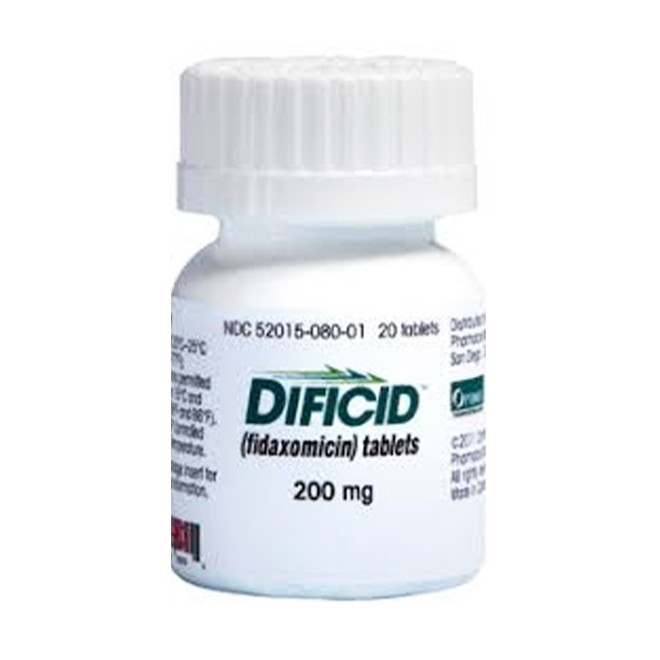


Dificid (fidaxomicin) is a macrolide antibacterial agent, primarily used to treat Clostridioides difficile - associated diarrhea (CDAD) in adult patients and pediatric patients aged 6 months and older.
How to Use Dificid (Fidaxomicin)
Dosage Forms and Target Populations
Tablets (200 mg): Suitable for adults and pediatric patients with a body weight of ≥ 12.5 kg who can swallow the whole tablet and require a fixed dose of 200 mg.
Oral suspension (40 mg/mL): Suitable for pediatric patients with swallowing difficulties who need dose administration based on precise body weight (body weight ≥ 4 kg).
Recommended Dosages
Adult patients: Take one 200 mg tablet orally twice daily for 10 consecutive days.
Pediatric patients (6 months to under 18 years old):
Tablets: For patients with a body weight of ≥ 12.5 kg who can swallow tablets, take 200 mg each time, twice daily, for a 10 - day course of treatment.
Oral suspension:
Body weight 4 kg to < 7 kg: 80 mg (2 mL of suspension) each time.
Body weight 7 kg to < 9 kg: 120 mg (3 mL of suspension) each time.
Body weight 9 kg to < 12.5 kg: 160 mg (4 mL of suspension) each time.
Body weight ≥ 12.5 kg: 200 mg (5 mL of suspension) each time.
General Principles for Administration
Take orally at fixed times every day, regardless of food intake.
Missed dose: If the time until the next scheduled dose is > 12 hours, take the missed dose; if vomiting occurs immediately after taking the medicine, repeat the dose.
Preparation and Storage of Suspension
Preparation steps: Add 130 mL of purified water to a glass vial containing 5.45 g of fidaxomicin granules, shake horizontally for at least 2 minutes to achieve a uniform suspension, and let it stand for 1 minute to confirm no stratification.
Storage requirements: After preparation, the suspension must be refrigerated (2°C - 8°C) and used up within 12 days.
Dose Adjustment of Dificid (Fidaxomicin)
Situations Requiring Suspension or Dose Adjustment
Allergic reactions: Such as dyspnea, angioedema, rash, or pruritus. The drug must be discontinued immediately and symptomatic treatment should be given.
Severe gastrointestinal events: Such as gastrointestinal bleeding, intestinal obstruction, or toxic megacolon.
Hematological abnormalities: Neutropenia or anemia requires risk assessment.
Liver function abnormalities: Significant elevation of alanine aminotransferase (ALT) or aspartate aminotransferase (AST).
Dificid (Fidaxomicin) Use in Special Populations
Pediatric Patients
6 months to under 18 years old: Calculate the dose accurately based on body weight, and prioritize the use of the suspension dosage form.
Infants < 6 months old: The efficacy has not been established.
Pregnant and Lactating Women
Pregnancy: There is insufficient data to confirm safety, and the drug should be used after weighing the pros and cons.
Lactation: It is unknown whether the drug passes into breast milk. It is recommended to suspend breastfeeding during treatment.
Patients with Hepatic or Renal Impairment
Hepatic impairment: No dedicated studies have been conducted, but the drug is not significantly metabolized by the liver, so the expected impact is limited.
Renal impairment: No dose adjustment is needed for patients with mild to moderate impairment; there is no clear recommendation for patients with severe impairment (creatinine clearance < 30 mL/min).