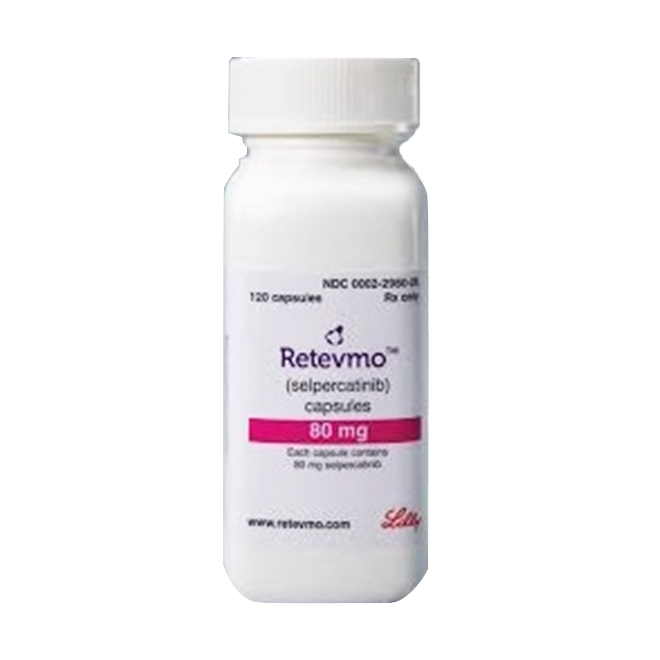


Selpercatinib (Retevmo) is an oral, precision-targeted antineoplastic agent that selectively inhibits the RET driver gene.
I. Dosage and Administration
1. Adults and Adolescents Aged 12 Years and Older
Dosage is weight-based:
< 50 kg: 120 mg twice daily
≥ 50 kg: 160 mg twice daily
"Twice daily" means administration approximately every 12 hours.
2. Children Aged 2 to < 12 Years
Dosing is calculated by body surface area (BSA):
0.33–0.65 m²: 40 mg three times daily
0.66–1.08 m²: 80 mg twice daily
1.09–1.52 m²: 120 mg twice daily
≥ 1.53 m²: 160 mg twice daily
Not recommended for children with BSA < 0.33 m².
3. Dosage Adjustment for Special Populations
For patients with severe hepatic impairment (total bilirubin 3–10 × ULN):
40 mg three times daily → 40 mg twice daily
80 mg twice daily → 40 mg twice daily
120 mg twice daily → 80 mg twice daily
160 mg twice daily → 80 mg twice daily
4. Administration Instructions
Swallow capsules or tablets whole; do not crush or chew.
May be taken with or without food, except when co-administered with a proton pump inhibitor (PPI), which requires administration with food.
II. Precautions
1. Mandatory Testing Prior to Treatment
Confirm the presence of RET gene fusion (non-small cell lung cancer, thyroid cancer, and other solid tumors) or RET gene mutation (medullary thyroid cancer) via authorized testing before initiation.
Do not administer empirically without confirmed RET genetic status.
2. Drugs to Avoid Concomitantly
Acid-reducing agents: PPIs (e.g., omeprazole), H2-receptor antagonists (e.g., famotidine), and aluminum/magnesium/calcium-containing antacids may reduce efficacy.
If unavoidable:
With PPIs: Take with food.
With H2 antagonists: Take 2 hours before or 10 hours after the H2 blocker.
With antacids: Take 2 hours before or 2 hours after the antacid.
CYP3A inhibitors/inducers:
Strong/moderate CYP3A inhibitors (e.g., itraconazole, grapefruit juice) may increase toxicity risk.
Strong/moderate CYP3A inducers (e.g., rifampicin, St. John's Wort) may reduce efficacy.
Concomitant use should be avoided.
III. Healthy Lifestyle Recommendations
1. Blood Pressure Management
Hypertension is one of the most common adverse reactions to this drug.
Monitor blood pressure daily and record readings during treatment.
A low-sodium diet (< 2 g sodium/day), regular sleep schedule, and avoiding emotional stress help control blood pressure.
If significant hypertension occurs, your doctor will prescribe antihypertensive medications.
2. Diet and Hydration
If diarrhea occurs, replenish fluids and electrolytes to prevent dehydration.
Recommended fluids: oral rehydration salts, lightly salted water, or clear broths.
Avoid high-fiber, spicy, or fatty foods, which may exacerbate diarrhea.
For dry mouth: sip water frequently, suck on sugar-free candies, or use artificial saliva.
3. Skin and Oral Care
For rash: keep skin clean and dry, use mild, non-irritating skincare products, and avoid sun exposure.
For oral mucositis or dry mouth: use a soft-bristled toothbrush and avoid alcohol-containing mouthwashes.
4. Contraception and Fertility Planning
Women of childbearing potential must use effective contraception during treatment and for 1 week after the last dose.
Male patients should also use contraception during this period.
This drug may impair fertility. Discuss family planning with your doctor in advance.