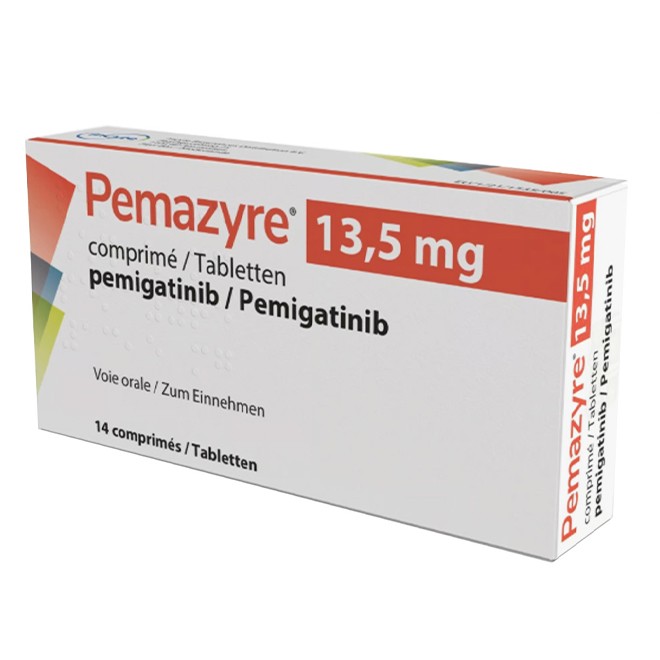


Pemigatinib (Pemazyre) is an important targeted therapy for specific gene mutations, playing a pivotal role in the treatment of advanced cholangiocarcinoma and myeloid/lymphoid neoplasms (MLN) with FGFR1 rearrangement.
What are the Precautions for Taking Pemigatinib (Pemazyre)?
Patient Selection and Confirmation
Rigorous genetic testing confirmation is mandatory for patients before initiating pemigatinib treatment.
For cholangiocarcinoma patients, FGFR2 fusion or other rearrangements must be detected.
For patients with myeloid/lymphoid neoplasms, the presence of FGFR1 rearrangement needs to be confirmed.
Dosage Specification Identification
Pemigatinib is available in three dosage strengths: 4.5 mg, 9 mg, and 13.5 mg.
Patients must ensure that they take the exact dose prescribed by the physician. Tablets of different strengths vary in shape and marking and should be carefully identified.
Correct Administration Method
Pemigatinib tablets should be swallowed whole; do not crush, chew, split, or dissolve them.
The medication can be taken at approximately the same time each day, either with or without food. However, concomitant use with grapefruit products should be avoided.
Medication Monitoring for Pemigatinib (Pemazyre)
Ophthalmologic Monitoring Requirements
Pemigatinib may cause ocular toxicities such as retinal pigment epithelial detachment (RPED).
A comprehensive ophthalmologic examination, including optical coherence tomography (OCT), must be performed before treatment initiation.
After starting treatment, re-examination is required every 2 months for the first 6 months, then every 3 months thereafter.
If visual symptoms such as blurred vision, floaters, or photopsia occur, immediate ophthalmologic evaluation is needed.
Serum Phosphorus Level Monitoring
Hyperphosphatemia is a common pharmacological effect of pemigatinib, but it may also lead to serious complications such as soft tissue mineralization.
When the serum phosphate level exceeds 5.5 mg/dL, a low-phosphorus diet should be initiated.
If the serum phosphate level exceeds 7 mg/dL, phosphate-lowering treatment should be started, and serum phosphorus levels should be monitored weekly.
Drug Interaction Monitoring
Pemigatinib has interactions with strong or moderate CYP3A inducers or inhibitors.
Concomitant use with these drugs should be avoided. If co-administration is unavoidable, the dose of pemigatinib must be adjusted accordingly, and adverse reactions should be closely monitored.