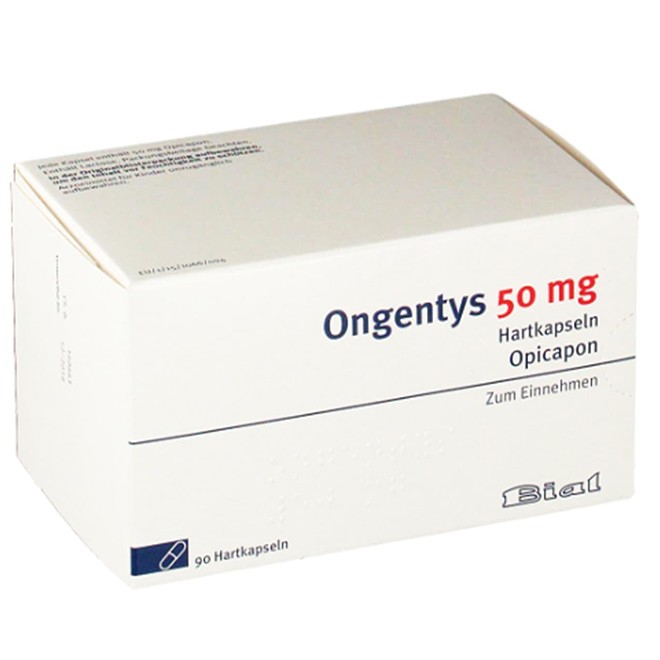


Opicapone (Ongentys) is a selective, reversible peripheral catechol-O-methyltransferase (COMT) inhibitor. It is used as an adjunctive therapy to levodopa/carbidopa for the management of "off" episodes in patients with Parkinson's disease (PD).
Dosage and Administration, Recommended Dose of Opicapone (Ongentys)
Routine Recommended Dose
The recommended dose of opicapone is 50 mg, administered orally once daily, before bedtime.
This dosing schedule helps maximize the therapeutic effect of the drug while minimizing potential adverse reactions.
Dietary Precautions
To ensure optimal absorption and efficacy of the drug, patients should not eat for 1 hour before and at least 1 hour after taking opicapone.
Taking the drug on an empty stomach can significantly improve its bioavailability and ensure a stable blood drug concentration.
Dosage Forms and Specifications
50 mg capsules: Dark blue opaque cap and dark pink opaque body, with white "OPC/50" printed axially.
25 mg capsules: Light blue opaque cap and light pink opaque body, with blue "OPC/25" printed axially.
Dose Adjustment of Opicapone (Ongentys)
Dose Adjustment in Patients with Hepatic Impairment
For patients with moderate hepatic impairment (Child-Pugh Class B), the recommended dose is 25 mg orally once daily, before bedtime.
For patients with severe hepatic impairment (Child-Pugh Class C), opicapone should be avoided.
Precautions for Discontinuation
When opicapone needs to be discontinued, patients' conditions should be monitored, and the doses of other dopaminergic drugs should be adjusted as needed.
Sudden discontinuation may lead to adverse reactions such as withdrawal hyperthermia and confusion.
Management of Missed Dose
If a dose of opicapone is missed, the next scheduled dose should be taken as usual at the predetermined time on the following day; do not double the dose to make up for the missed one.
Drug Interactions
Non-selective Monoamine Oxidase (MAO) Inhibitors
Concurrent use of opicapone with non-selective MAO inhibitors (such as phenelzine, isocarboxazid, and tranylcypromine) is prohibited.
Since both inhibit catecholamine metabolism, co-administration may cause arrhythmias, tachycardia, and excessive blood pressure fluctuations.
Drugs Metabolized by COMT
Caution is required when co-administering with drugs metabolized by COMT (such as isoprenaline, adrenaline, noradrenaline, dopamine, and dobutamine), regardless of the route of administration (including inhalation).
Patients' heart rate, cardiac rhythm, and blood pressure changes should be monitored.
Use of Opicapone (Ongentys) in Special Populations
Patients with Hepatic Impairment
Patients with mild hepatic impairment (Child-Pugh Class A) do not require dose adjustment.
Patients with moderate hepatic impairment (Child-Pugh Class B) should receive a recommended dose of 25 mg.
Patients with severe hepatic impairment (Child-Pugh Class C) are prohibited from using opicapone.
Patients with Renal Impairment
Patients with end-stage renal disease (ESRD, creatinine clearance < 15 mL/min) should avoid using opicapone.
Patients with mild, moderate, or severe renal impairment do not require dose adjustment.
Patients with severe renal impairment should be monitored for adverse reactions and discontinue the drug if tolerance issues arise.
Renal elimination plays a secondary role in the clearance of opicapone. Due to the potential risk of increased exposure, patients with severe renal impairment should be closely monitored for adverse reactions.