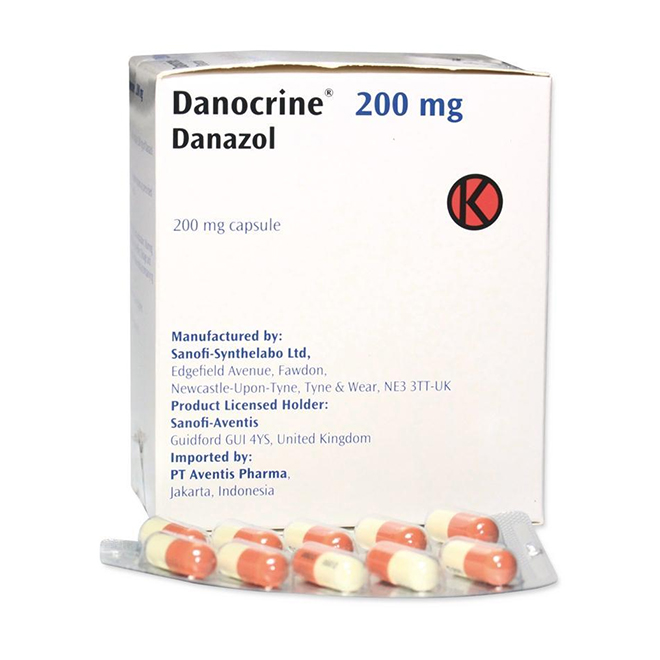


How should I use Danazol(Danocrine)?
The dosage and administration of danazol are crucial for patients to use the drug correctly. Before using danazol, patients should consult a doctor or pharmacist in detail to ensure they understand the usage and dosage of the drug.
What is the dosage and administration of danazol (Danocrine)?
Danazol is a drug clinically used to treat endometriosis, fibrocystic breast disease, and hereditary angioedema, with certain therapeutic effects in clinical treatment. The relevant dosage and administration of this drug are described in detail below.
1. Endometriosis
For patients with moderate to severe disease or infertility due to endometriosis, the recommended initial dose is 800 mg, administered in two divided doses. Amenorrhea and a rapid response to pain symptoms are optimally achieved at this dose level. Depending on the patient's response, the doctor may consider gradually reducing the dose to the minimum sufficient to maintain amenorrhea.
For mild cases, the recommended initial daily dose is 200–400 mg, divided into two administrations, which can be adjusted by the doctor based on the patient's response.
Treatment should begin during menstruation. If the patient is not menstruating, appropriate examinations should be performed to ensure the patient is not pregnant when starting danazol treatment.
Danazol treatment must continue for 3–6 months, and can be extended to 9 months if necessary. After treatment, if symptoms recur, treatment can be restarted.
2. Fibrocystic breast disease
The total daily dosage range of danazol for treating fibrocystic breast disease is 100–400 mg, administered in two divided doses based on the patient's response.
Treatment should start during menstruation. If the patient is not menstruating, appropriate examinations should be conducted to confirm non-pregnancy before initiating danazol treatment. Since ovulation may not be suppressed when danazol is taken at this dose, patients are advised to use non-hormonal contraceptive methods.
In most cases, breast pain and tenderness significantly improve within the first month and resolve after 2–3 months. Resolution of nodules typically requires 4–6 months of uninterrupted treatment.
Approximately one-third of patients treated with 100 mg danazol experience regular menstruation, menstrual irregularities, and amenorrhea. The higher the dose, the more frequent menstrual irregularities and amenorrhea occur.
Clinical studies show that 50% of patients may exhibit signs of symptom recurrence within one year, in which case treatment can be resumed.
3. Hereditary angioedema
The dosage requirement for continuous treatment of hereditary angioedema with danazol should be individualized based on the patient's clinical response.
Patients are advised to start with 200 mg, 2–3 times daily. After achieving a good initial response in preventing edema attacks, if the pre-treatment attack frequency necessitates, the dosage should be reduced by 50% or less every 1–3 months (or longer) to determine the appropriate maintenance dose.
If an attack occurs, the daily dosage can be increased by up to 200 mg. During the dosage adjustment phase, the doctor should closely monitor the patient's response, especially in patients with a history of airway involvement.